Drip Painting
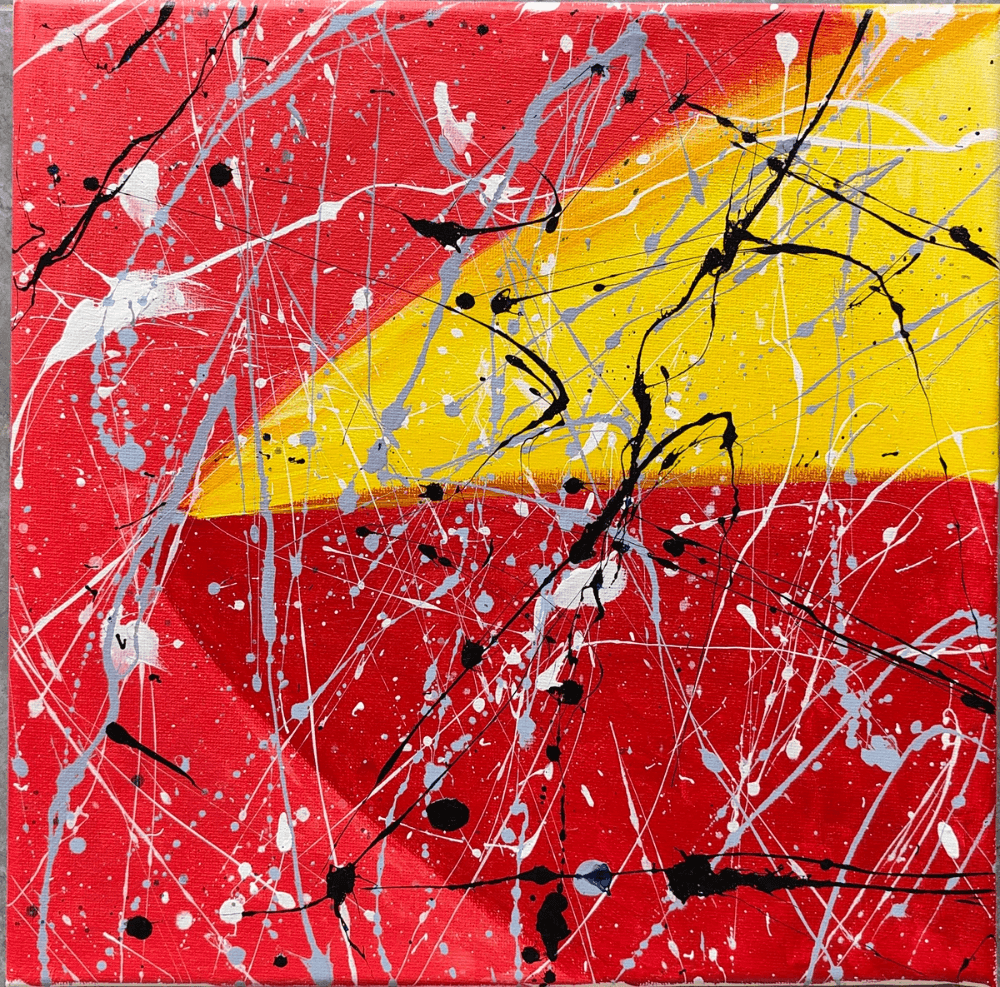
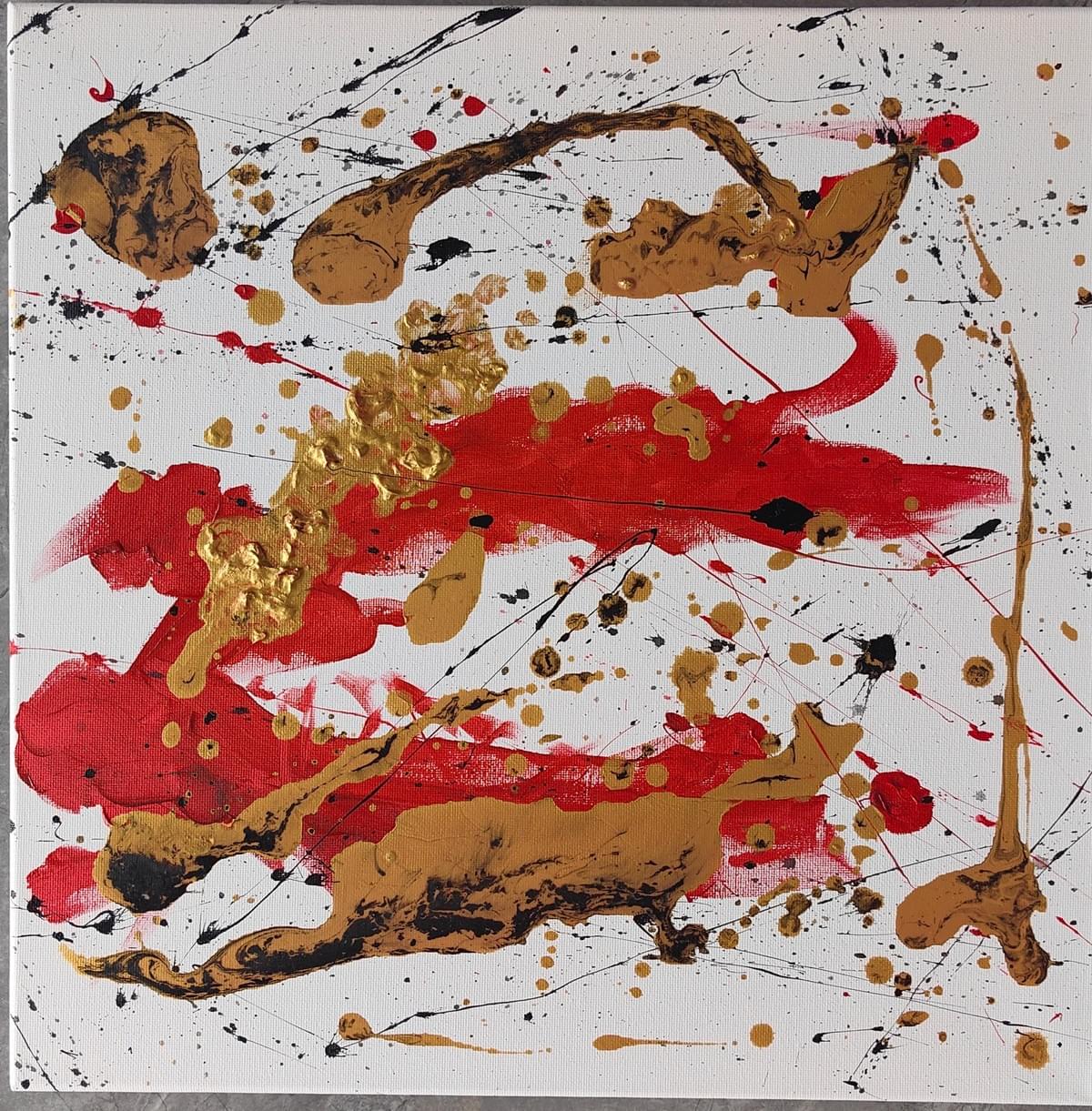
I wanted to explore how something that looks random can still have a sense of structure. For this section, I let the paint drip, splash, and move freely across the canvas instead of carefully controlling every mark. I liked the idea that I could create something without knowing exactly what the final result would look like. As the colors overlapped and the paint formed different lines and patterns, I started to see how a sense of order could appear from this randomness. It’s related to the connection between mathematics and art, because mathematical patterns can also emerge from processes that seem complicated or unpredictable. I wanted these paintings to show that math is not always about perfect geometric shapes and precise calculations; sometimes, it can be found in the patterns that emerge from chaos.
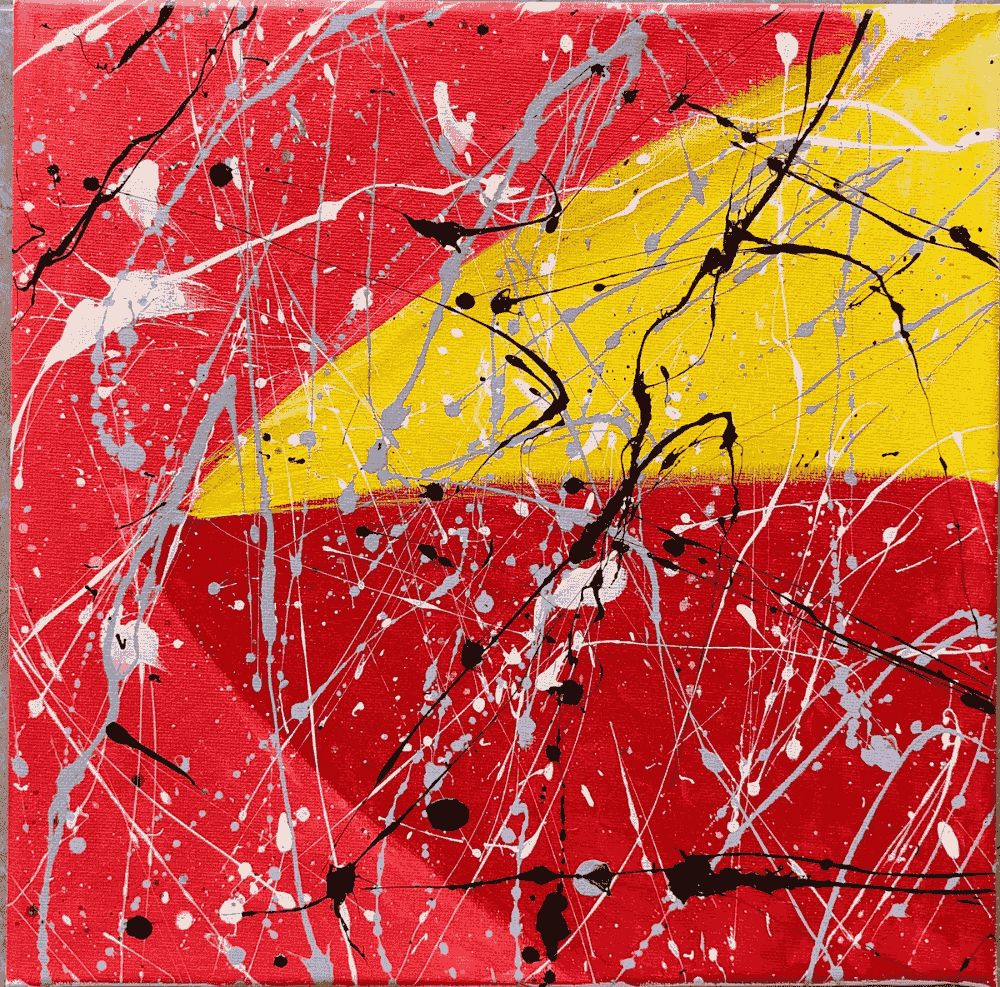
I wanted to create a painting that felt energetic and spontaneous, so I chose red and yellow as the main colors. I liked how these colors immediately made the canvas feel vibrant. Instead of carefully planning where every mark goes, I let the paint move more freely. I used a large brush to spread red and yellow across the canvas first, creating a foundation, and then I splashed black and white paint across the surface.
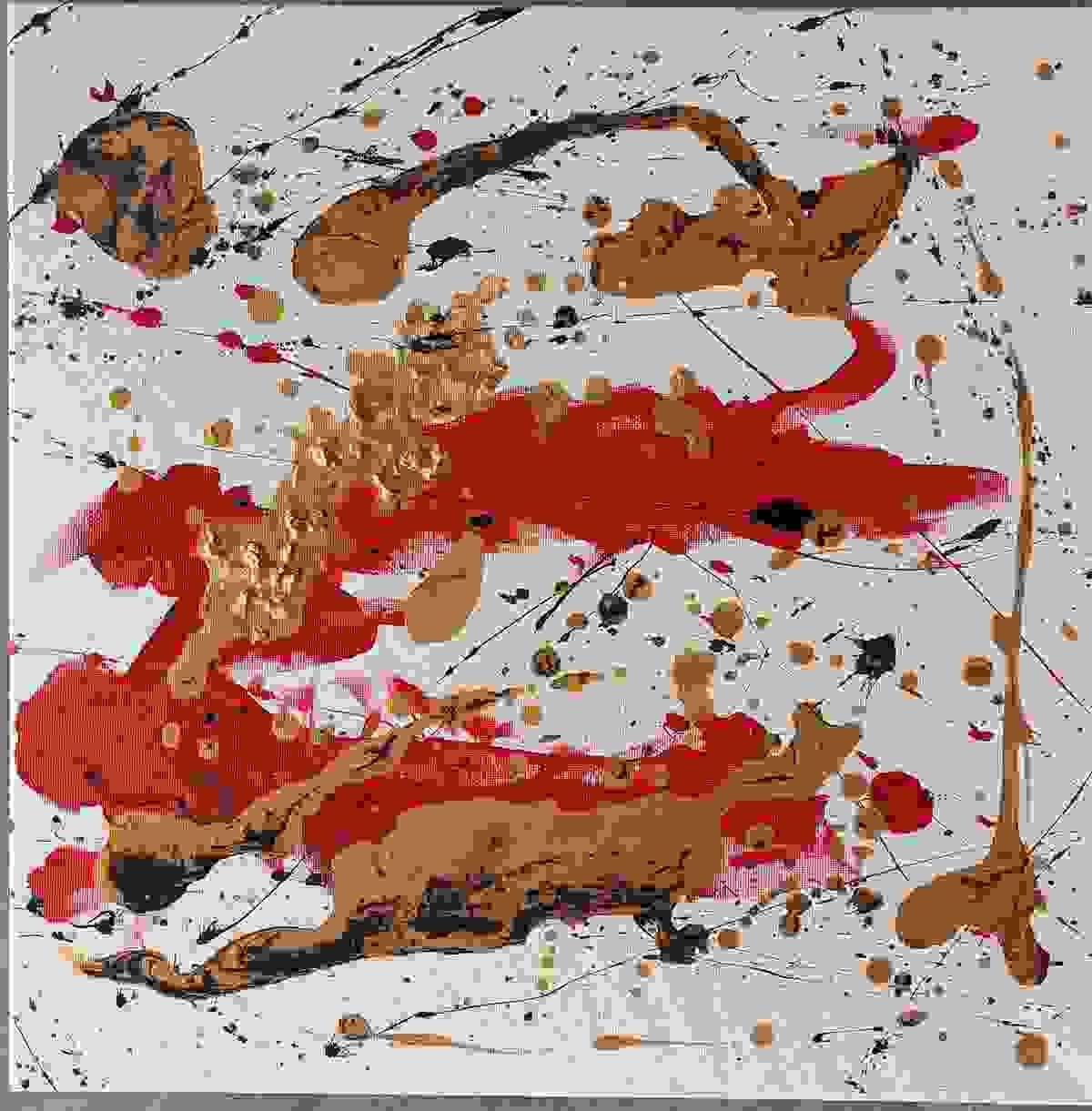
I wanted the black and gold to interrupt the red rather than simply blend into them. The splashing process was important to me because I wanted some parts of the painting to feel unpredictable. I think this makes the painting more interesting because I gave up some control and let the movement of the paint become part of the artwork.
Visualization of Mathematical Concepts in Painting
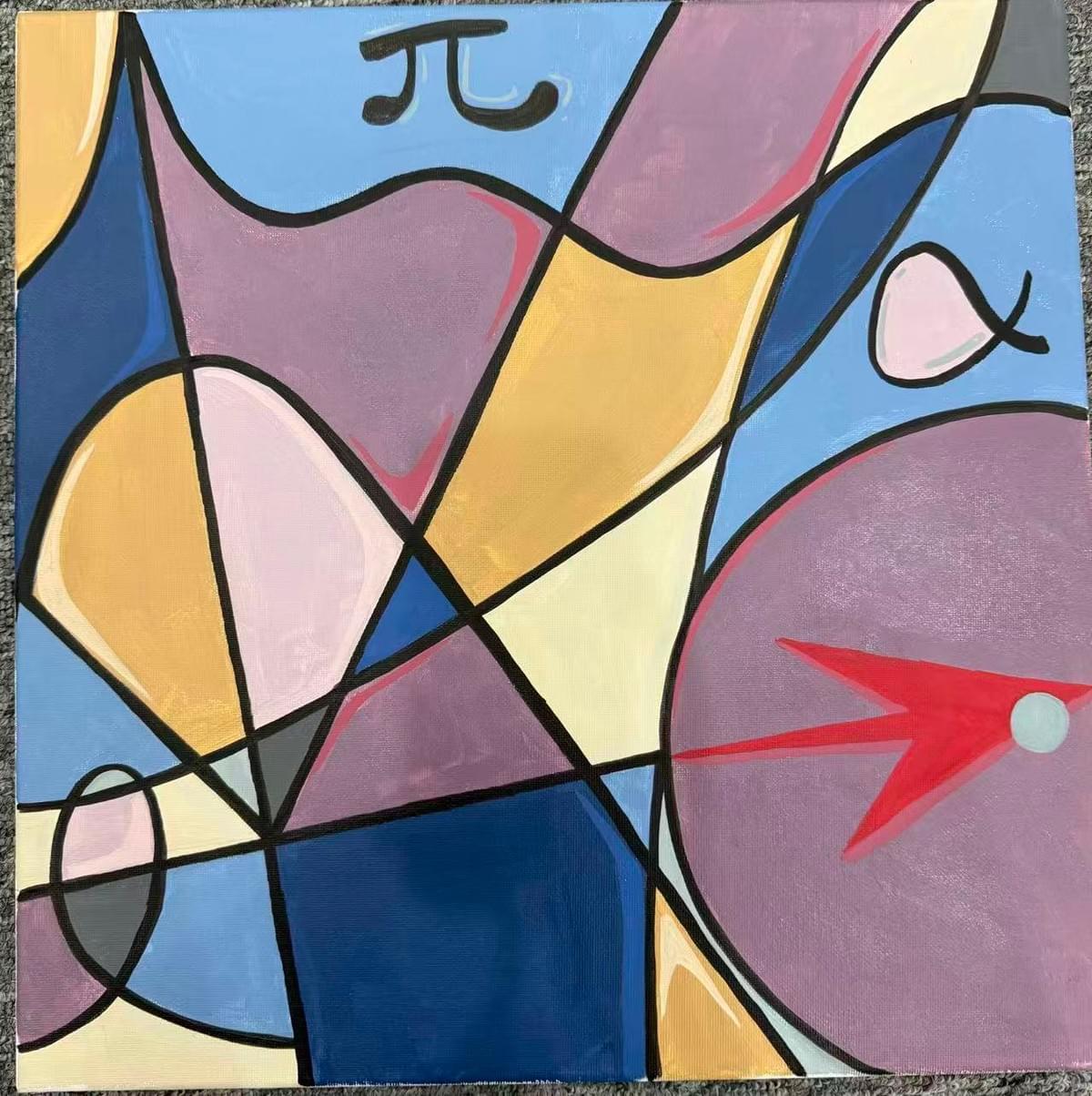
In this section, I explored how mathematical ideas could become something visual and artistic. I incorporated symbols, formulas, coordinate systems, and mathematical tools directly into my paintings. I was interested in how these elements could be rearranged, layered, and combined with color to create something that feels like art rather than a traditional math diagram. Through these pieces, I wanted to show a different side of mathematics. To me, mathematical symbols and structures are not just tools for solving problems; instead, they can also become part of a visual language.
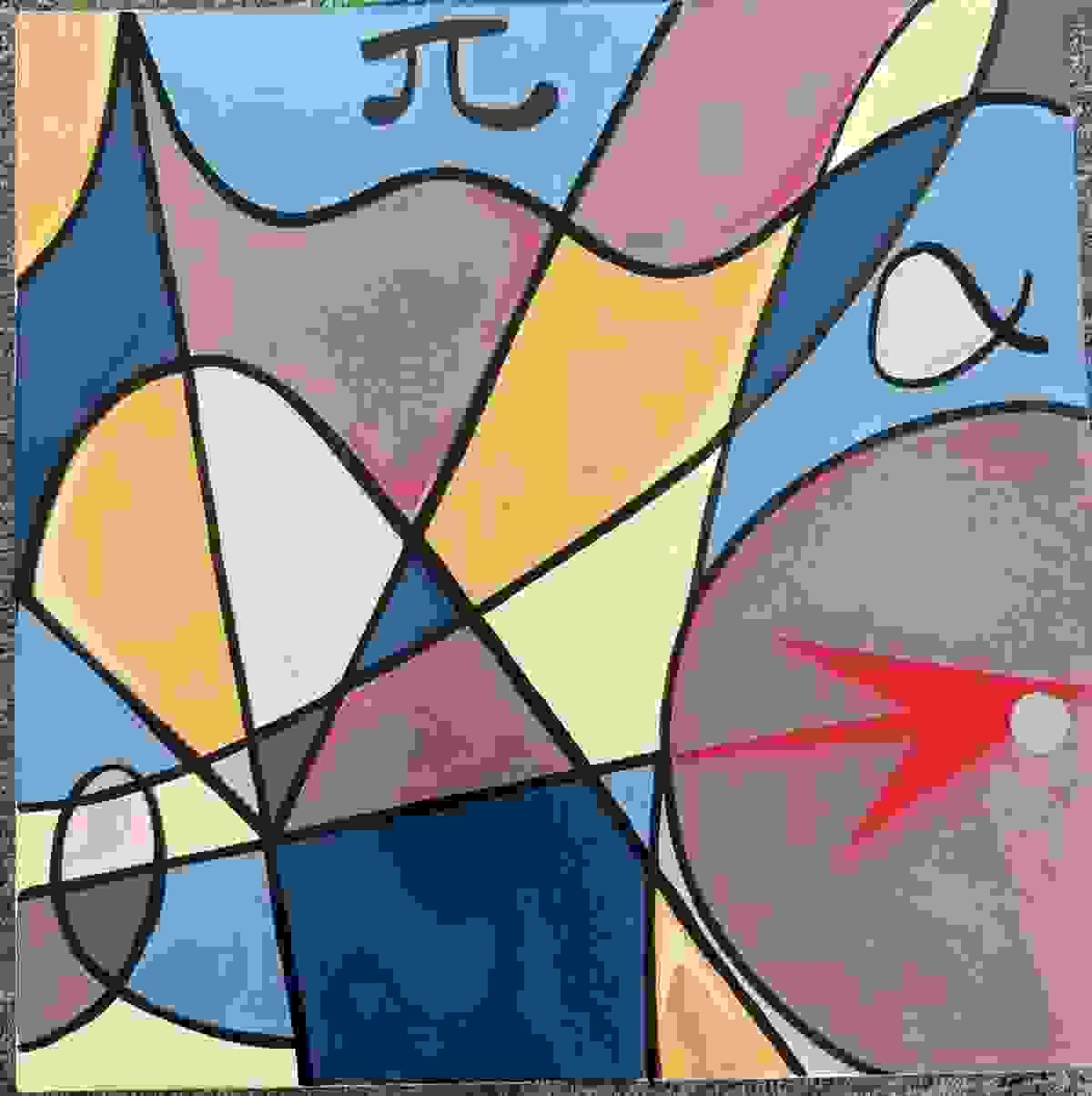
I wanted to make mathematical ideas something that could be seen rather than just something that exists in equations. In this painting, I included a coordinate system and a parabola because I wanted to turn a mathematical function into part of the visual composition. I also added symbols such as π and α because I liked how mathematical notation became part of the artwork itself. This piece reflects the way I personally see mathematics: equations, graphs, and symbols are not just abstract things, but can also have their own visual structure.
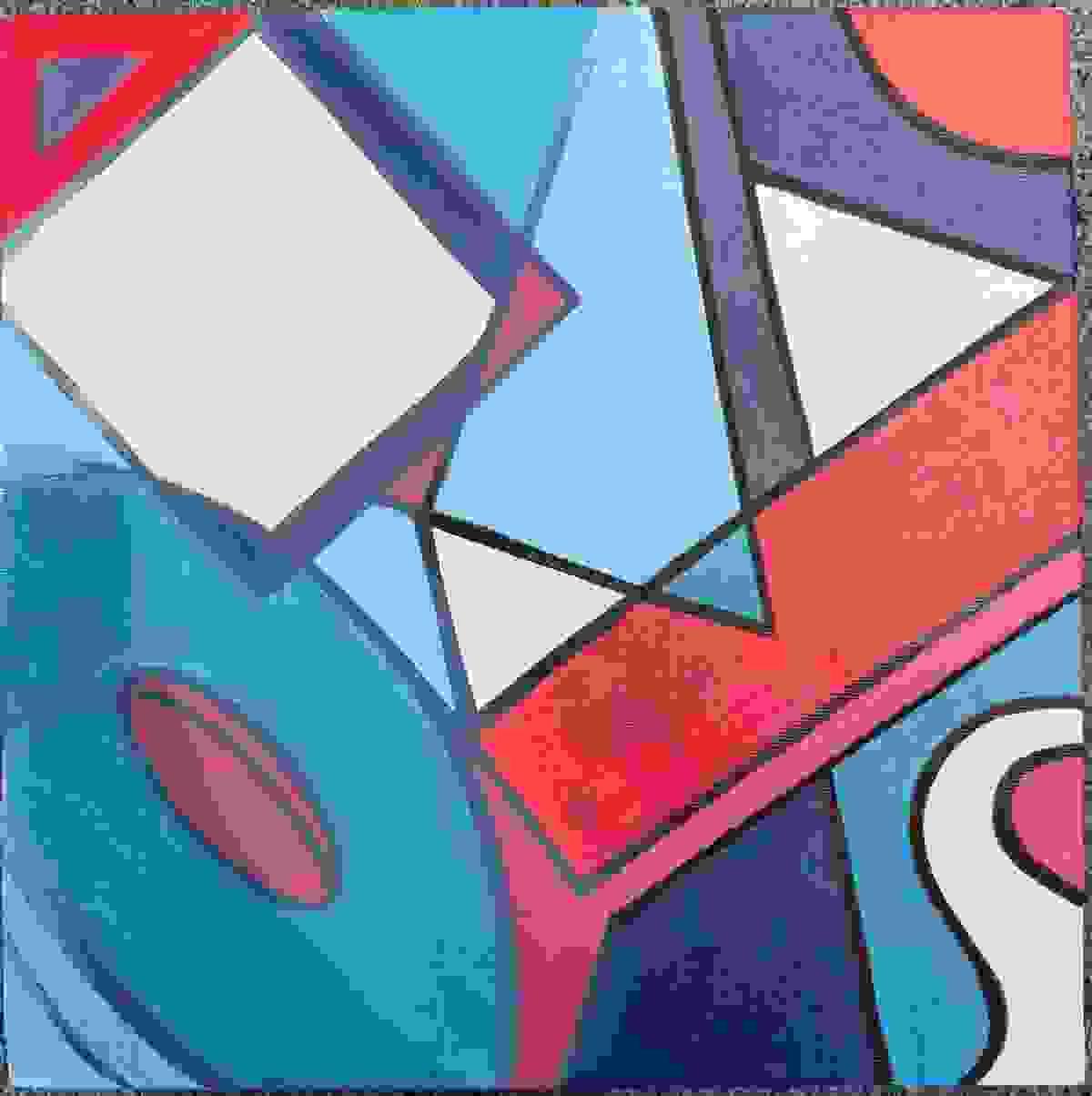
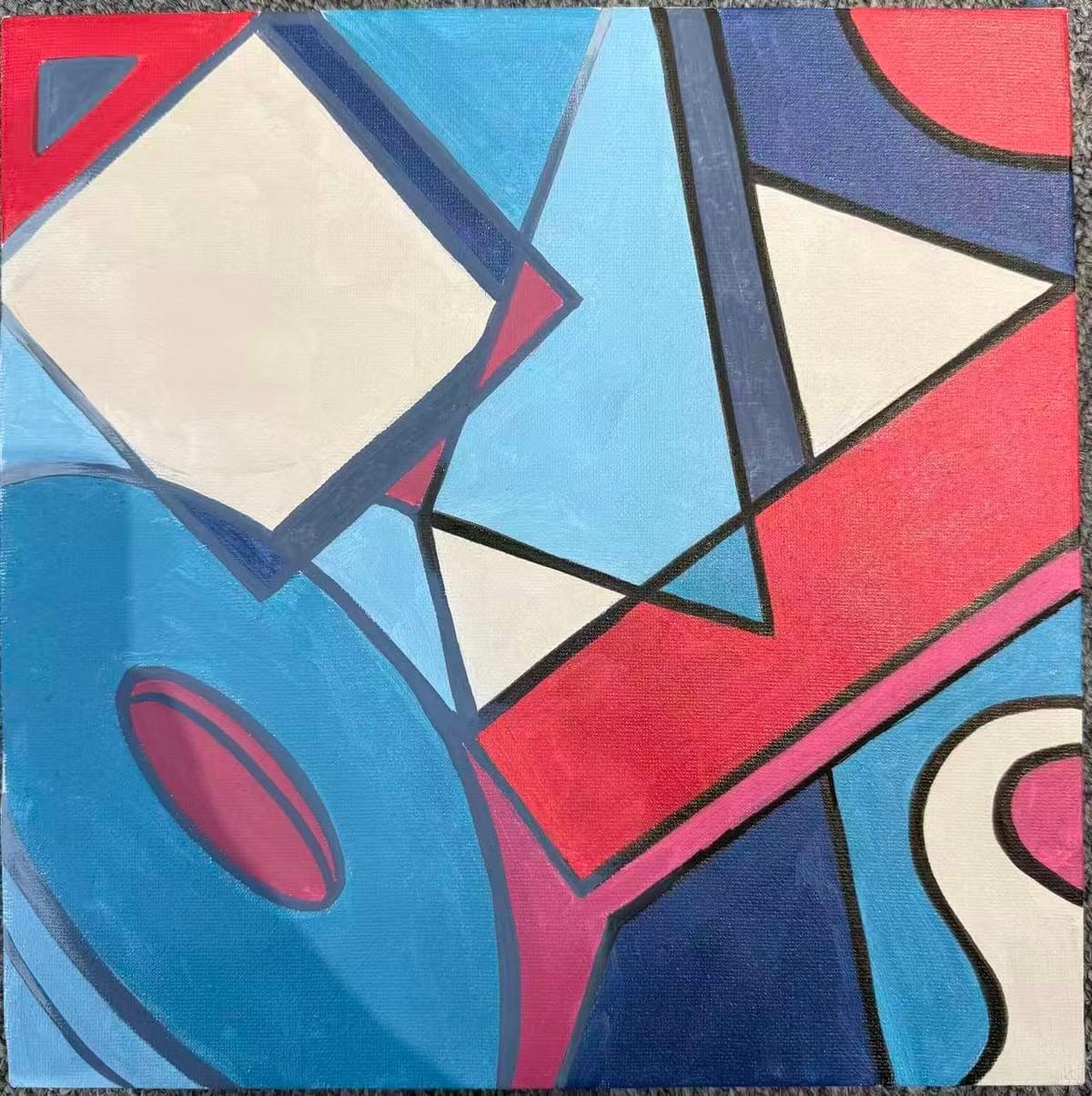
Similarly this painting explores the visualization of mathematical ideas through overlapping geometric and symbolic elements. I used ellipses, triangular rulers, and mathematical symbols as visual elements and placed them on top of each other. The symbol, half of the Ω (omega), is embedded within the design, and the viewer has to look more closely to find them. Through this piece, I wanted to show that mathematical symbols and geometric tools can have an artistic quality of their own when they are rearranged and carefully positioned.
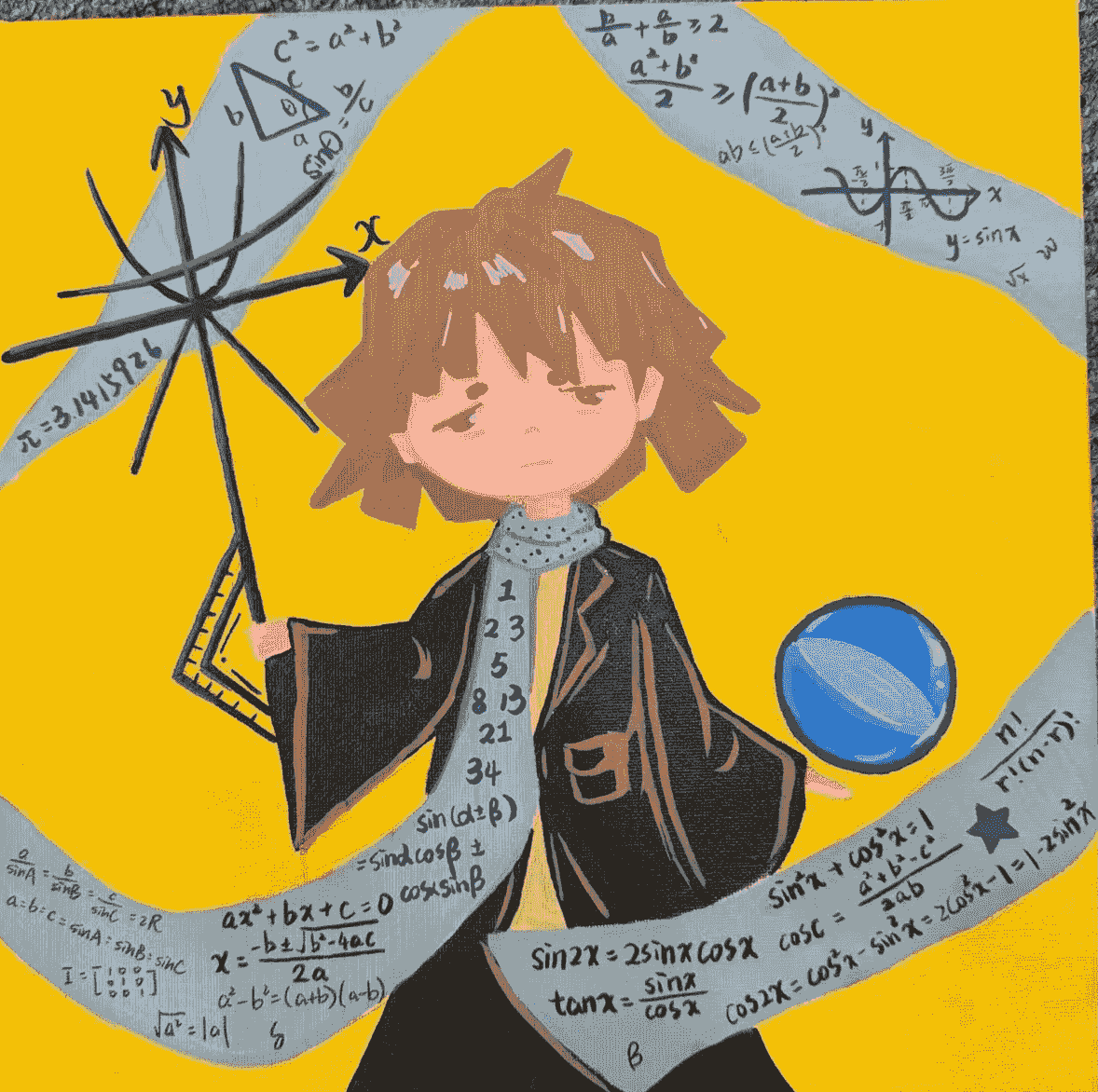
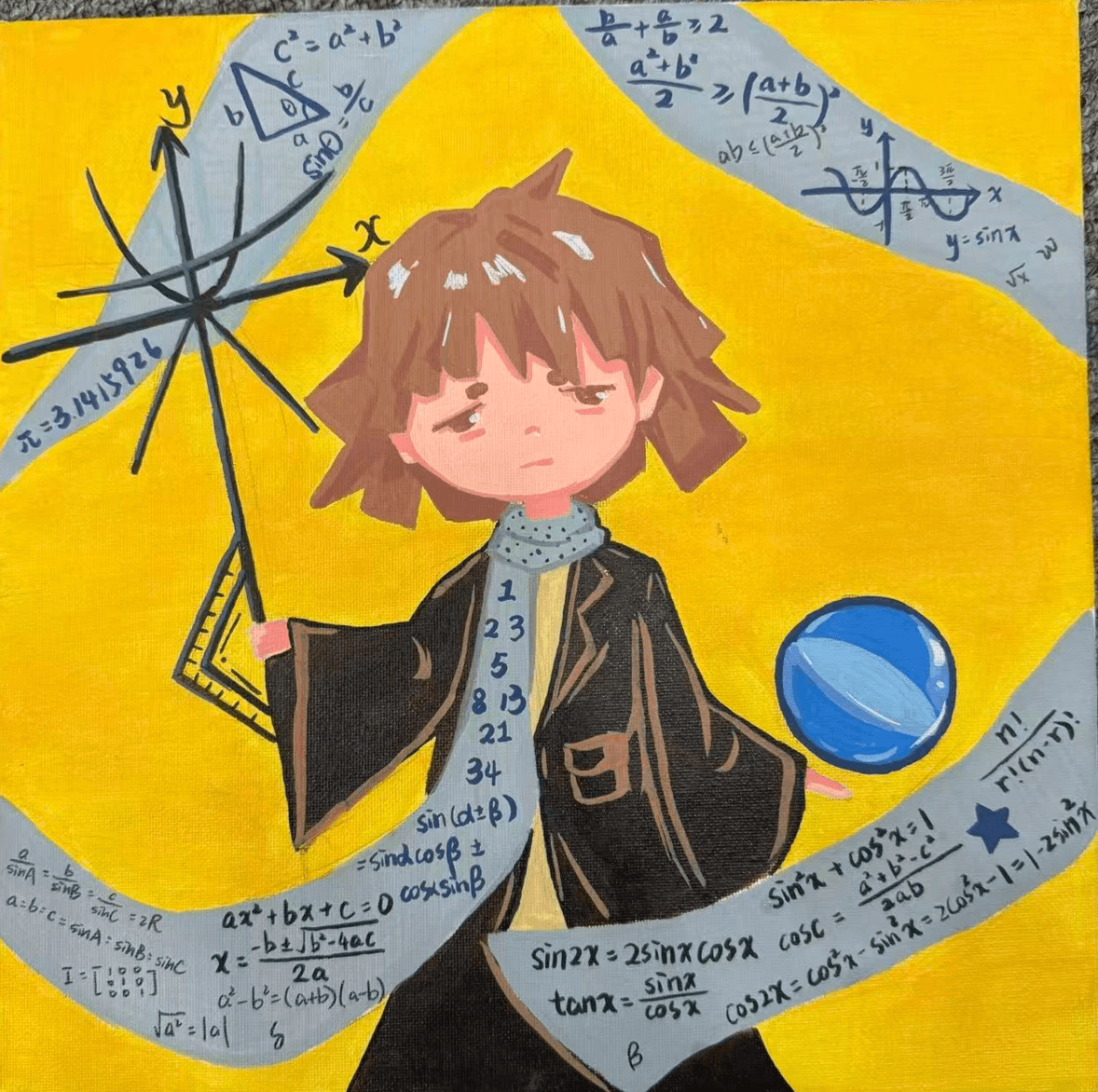
For this painting, I created a figure that represents the connection between mathematics and creativity. I gave the character different mathematical objects as part of his design. The triangular ruler and coordinate system in his left hand represent the tools I use to explore mathematical structures, while the three-dimensional sphere represents ideas from solid geometry. I also wanted the scarf to become part of the mathematical theme, so I covered it with equations and formulas. Instead of making mathematics appear only as a small detail, I wanted it to surround the character and become part of his identity. This makes the character feel like a visual representation of someone who represents both creativity and mathematics.
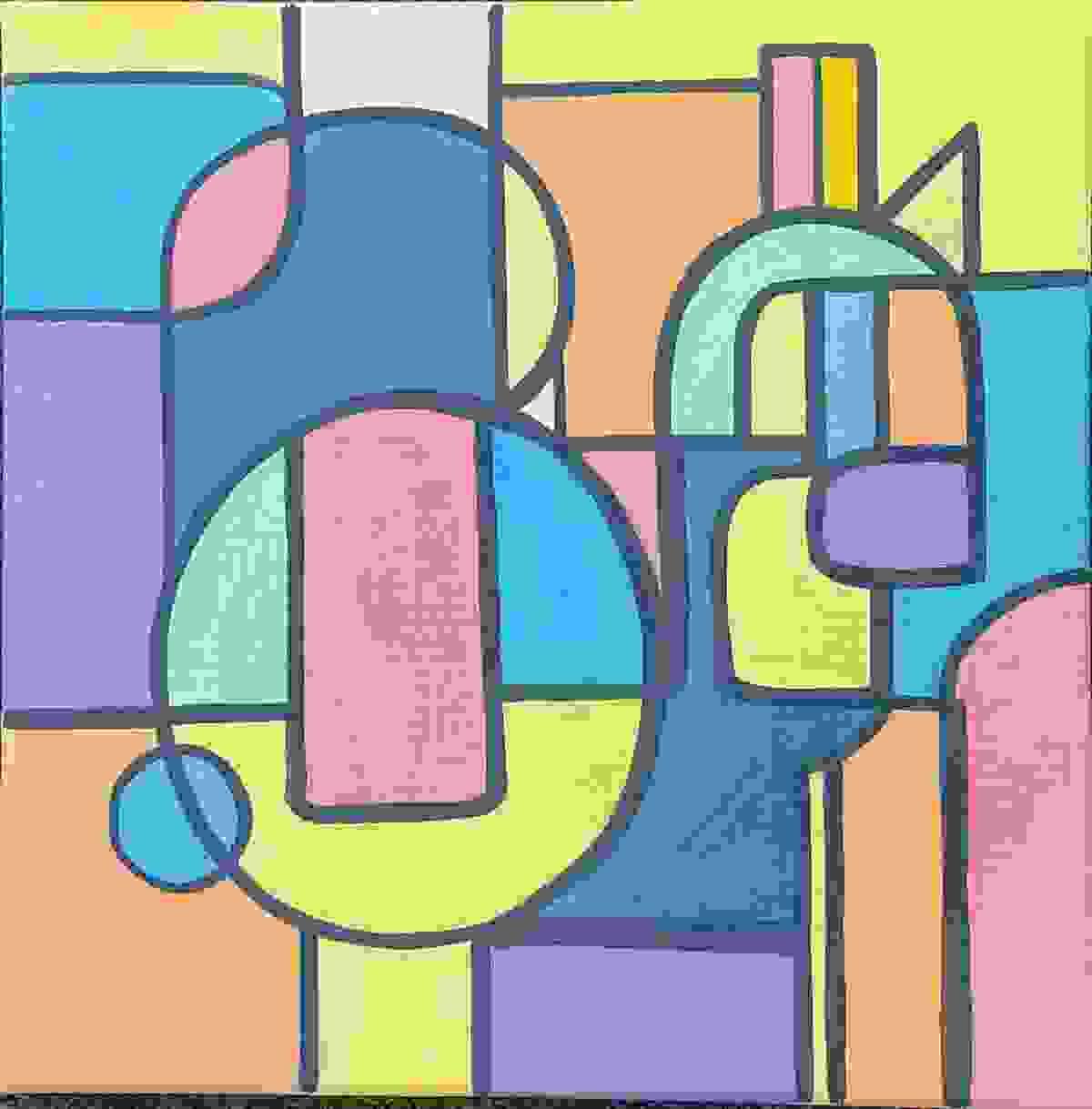
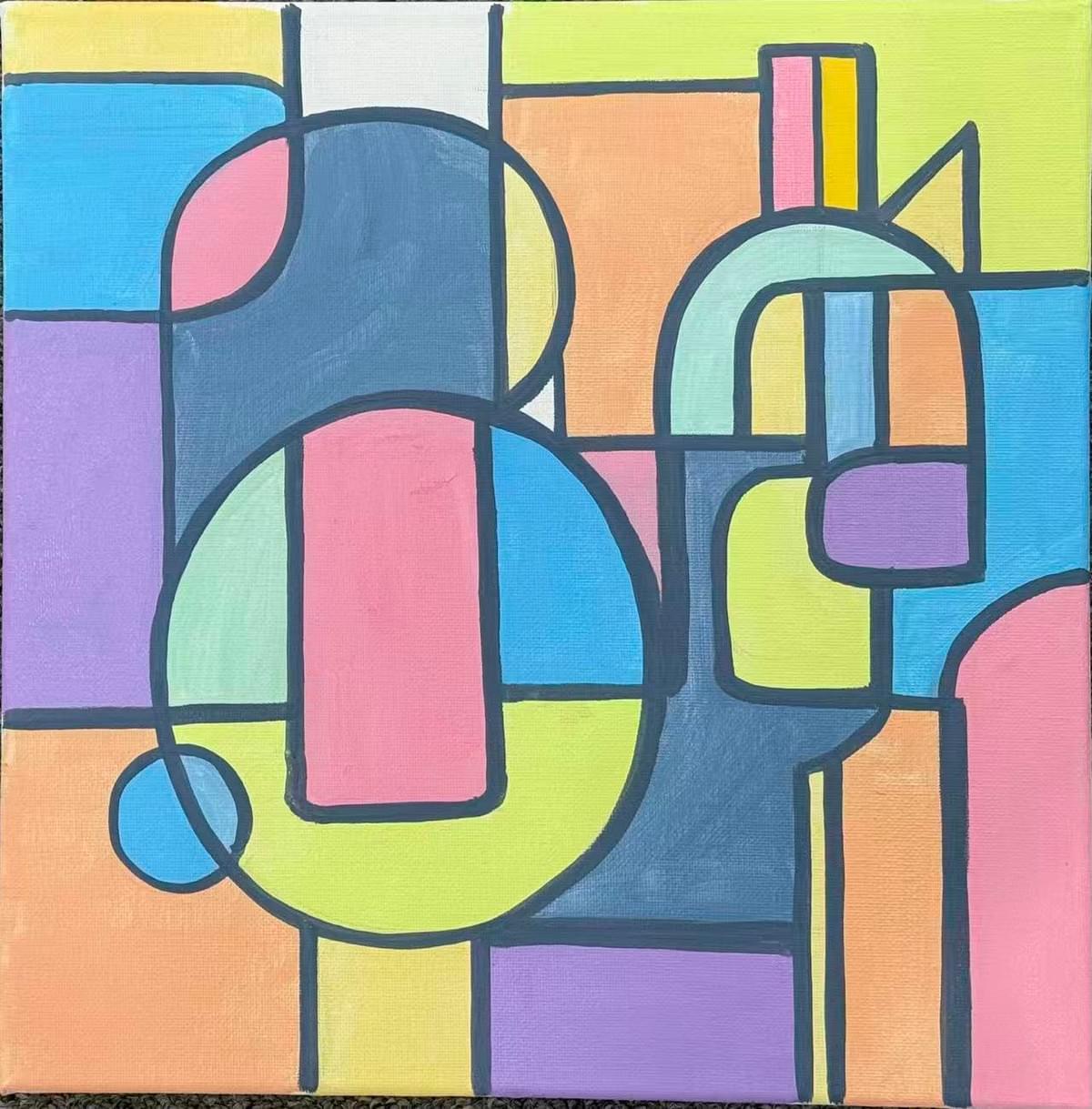
This painting explores a similar idea. I used circles, rectangles, and curved lines and let them overlap across the canvas, dividing the background into different blocks of color to create more contrast. These simple shapes are arranged in different ways while still creating a sense of harmony.
Fractal Patterns
Through paintings below, I explored the idea of repetition and self-similarity in both mathematics and nature. I was interested in how a simple pattern can repeat at different scales and gradually form something much more complex. The snowflakes and tree branches gave me a way to visualize this idea because their smaller parts can resemble the larger structures they belong to. As I worked on these paintings, I started to see fractals as a connection between mathematical structure and the natural world. I wanted to use color and repetition not only to make the paintings visually interesting, but also to make the idea of self-similarity something the viewer could actually see and understand.
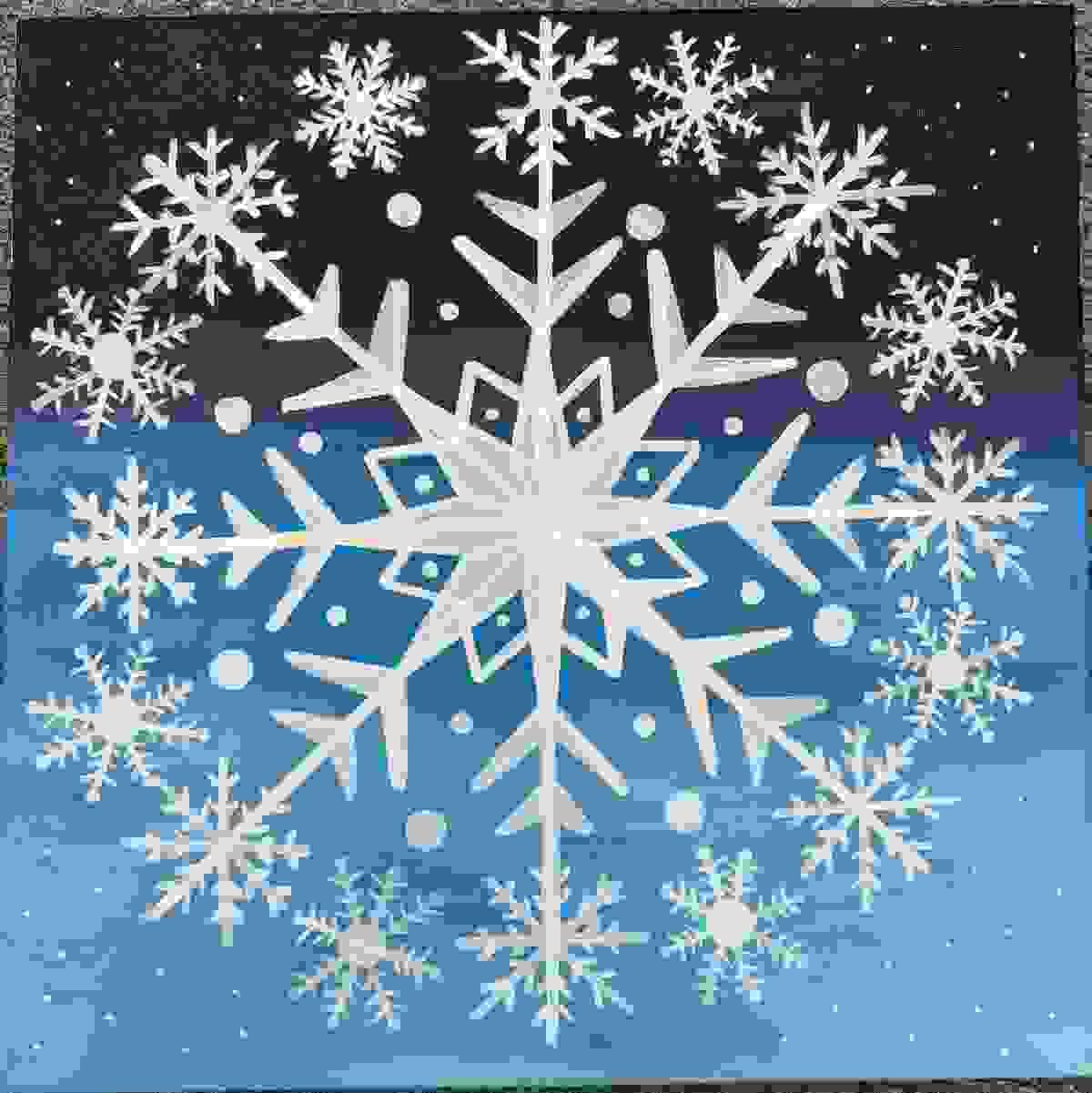
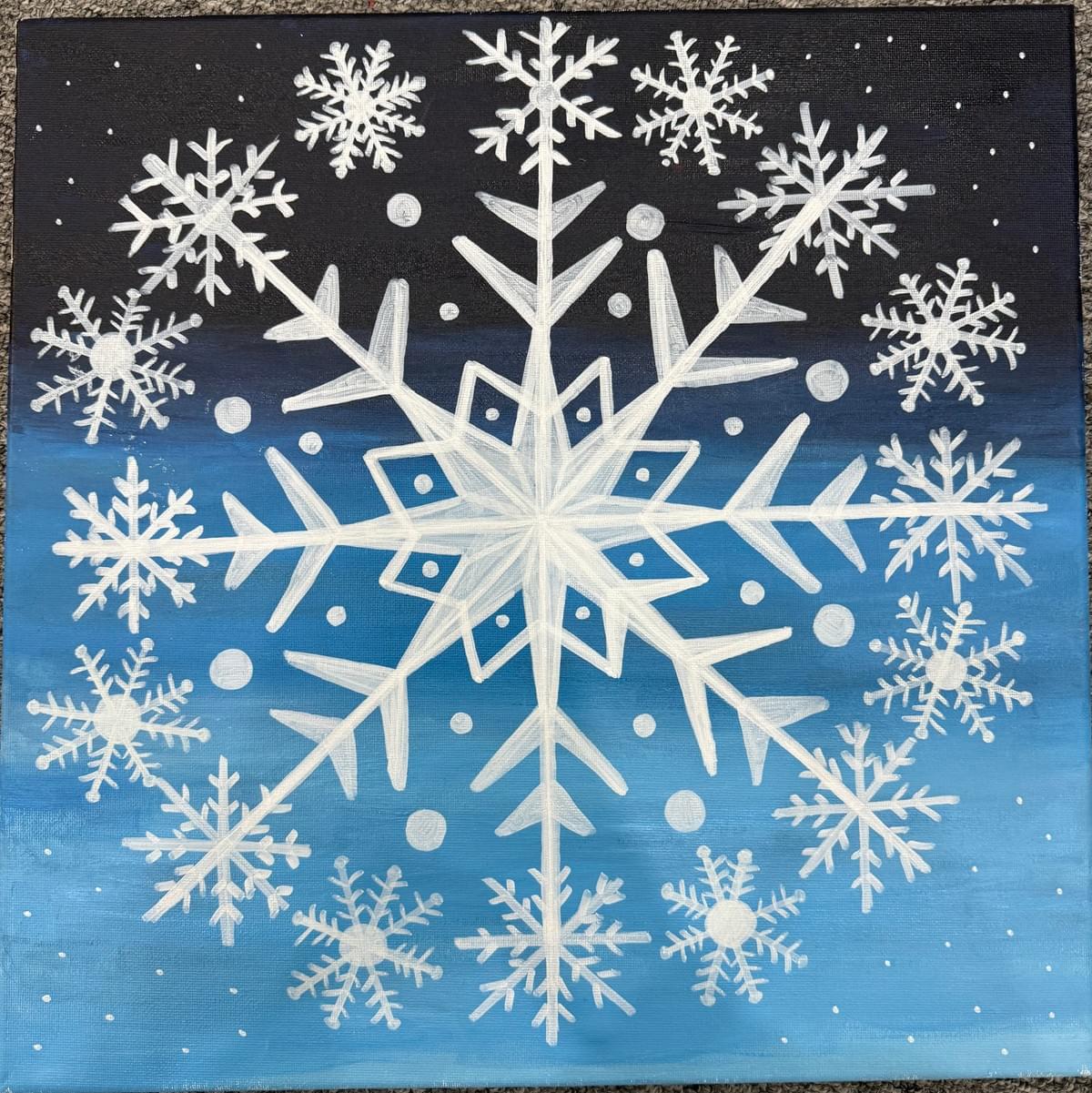
I used snowflakes to represent the idea of fractals because snowflakes are a natural example of repeated patterns. I created a background that gradually changes from deep blue to light blue since I wanted the painting to feel like it had depth. I then filled the composition with snowflakes. In this painting, a small part of a pattern can resemble the larger pattern, and it's really interesting. I wanted the viewer to notice this repetition, and see the connection between a mathematical idea, such as self-similarity and scaling, and something that already exists in nature.
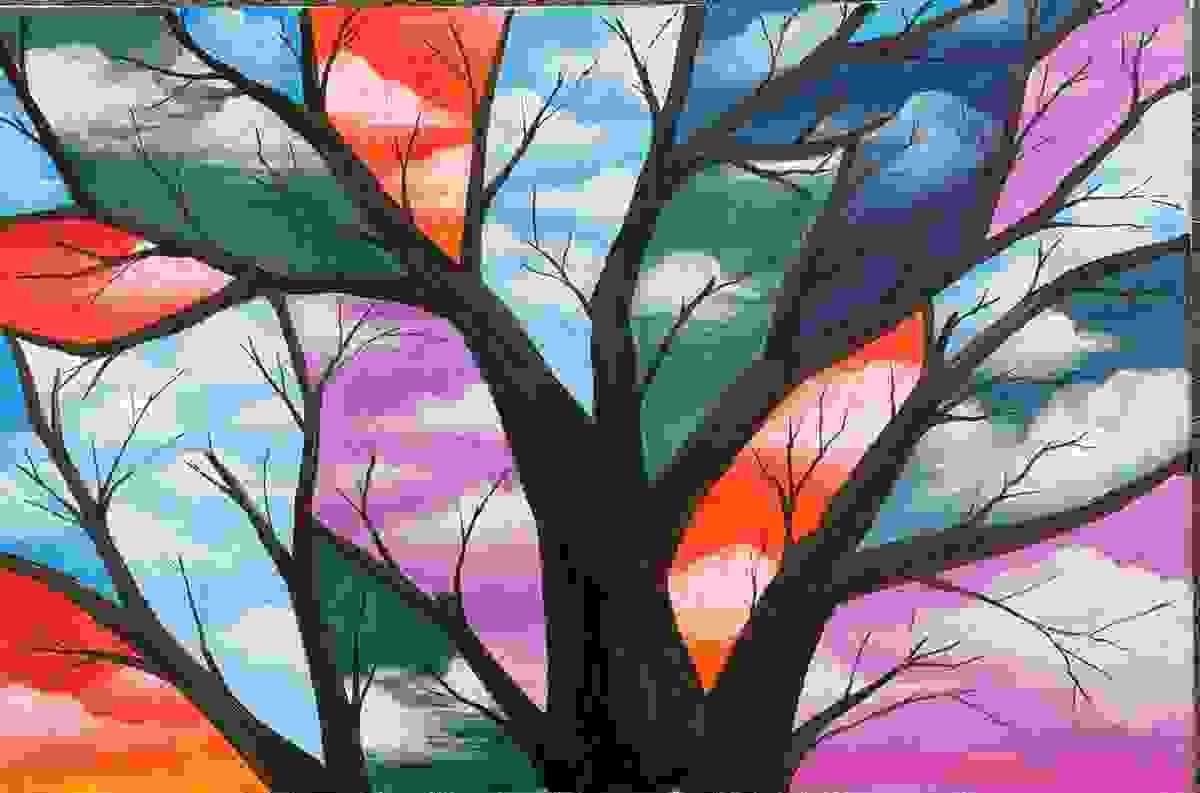
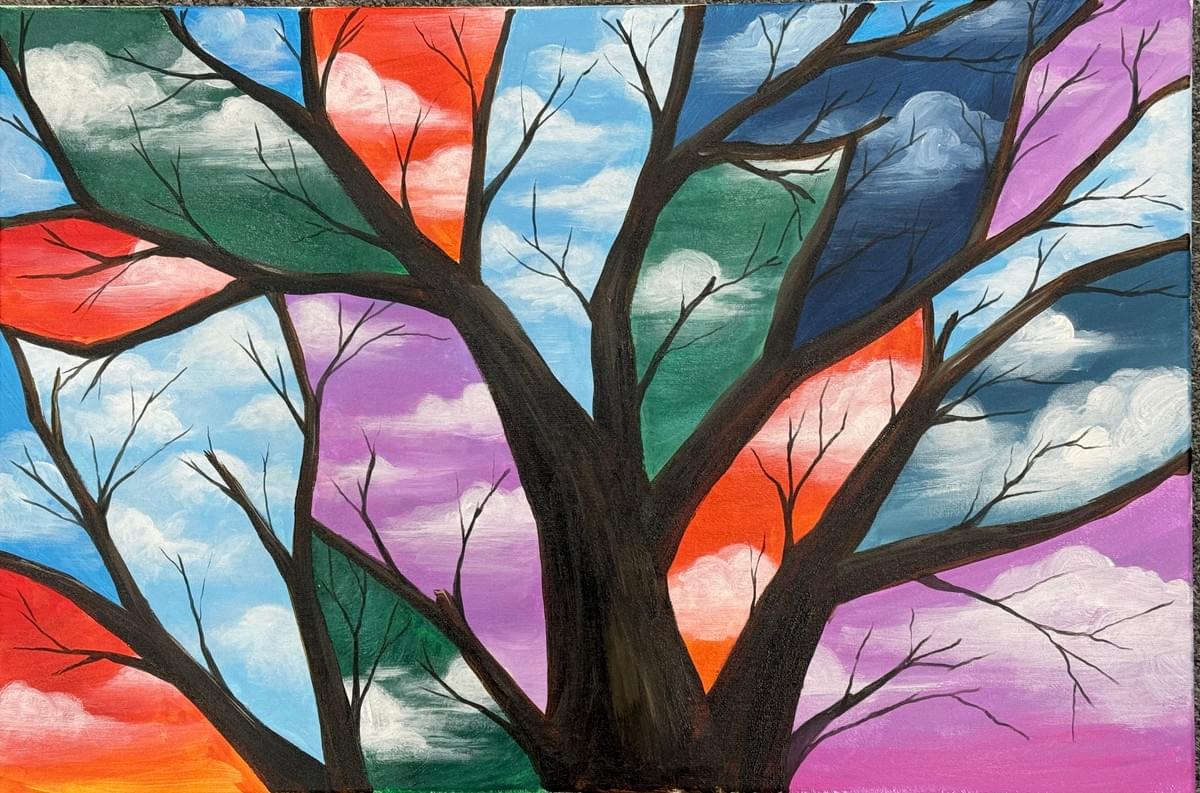
For the tree painting, I wanted to focus on the branching structure of fractals. The same basic pattern can appear again and again as a tree becomes smaller and more detailed. I tried to show this by making the smaller branches resemble the larger branches. I also made the background more colorful instead of keeping the focus only on the tree. I divided the background into different sections and gave each section a different sky and cloud pattern. I think the contrast between the colorful background and the repeated branches makes the mathematical structure easier to notice while still keeping the painting visually interesting.
Mosaic-style Paintings
In this section, I showed how mathematical patterns could be turned into continuous and decorative designs. I was inspired by the tessellation artworks of M. C. Escher and the mathematical idea of wallpaper patterns, especially the way simple shapes can repeat and fit together to cover an entire surface. Then, I experimented with interlocking shapes and repeated forms in my own paintings. As I worked on these pieces, I realized that repetition does not have to make an artwork feel predictable. By changing the colors, shapes, and small details, I could keep the mathematical structure while making each composition feel different.
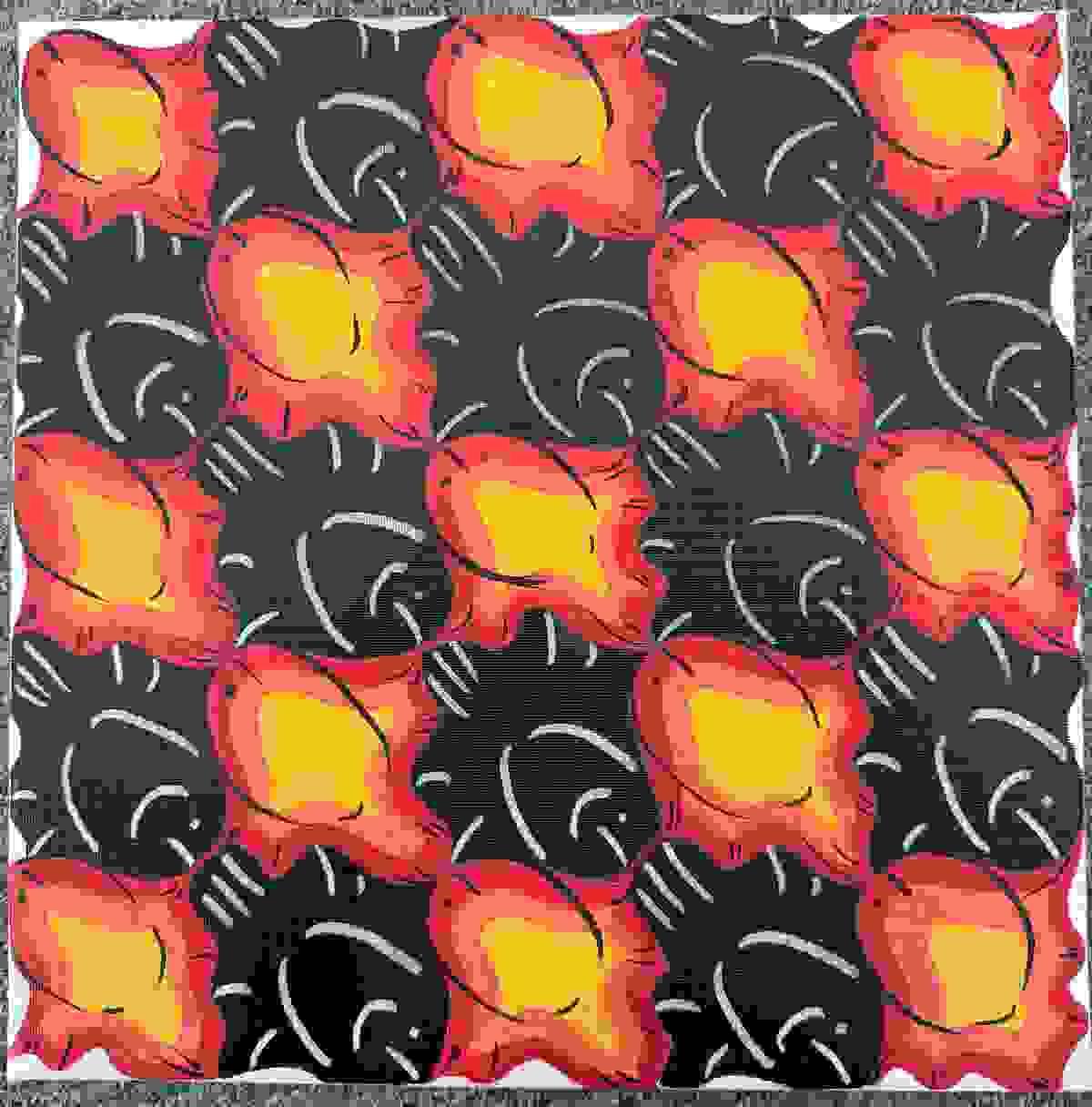
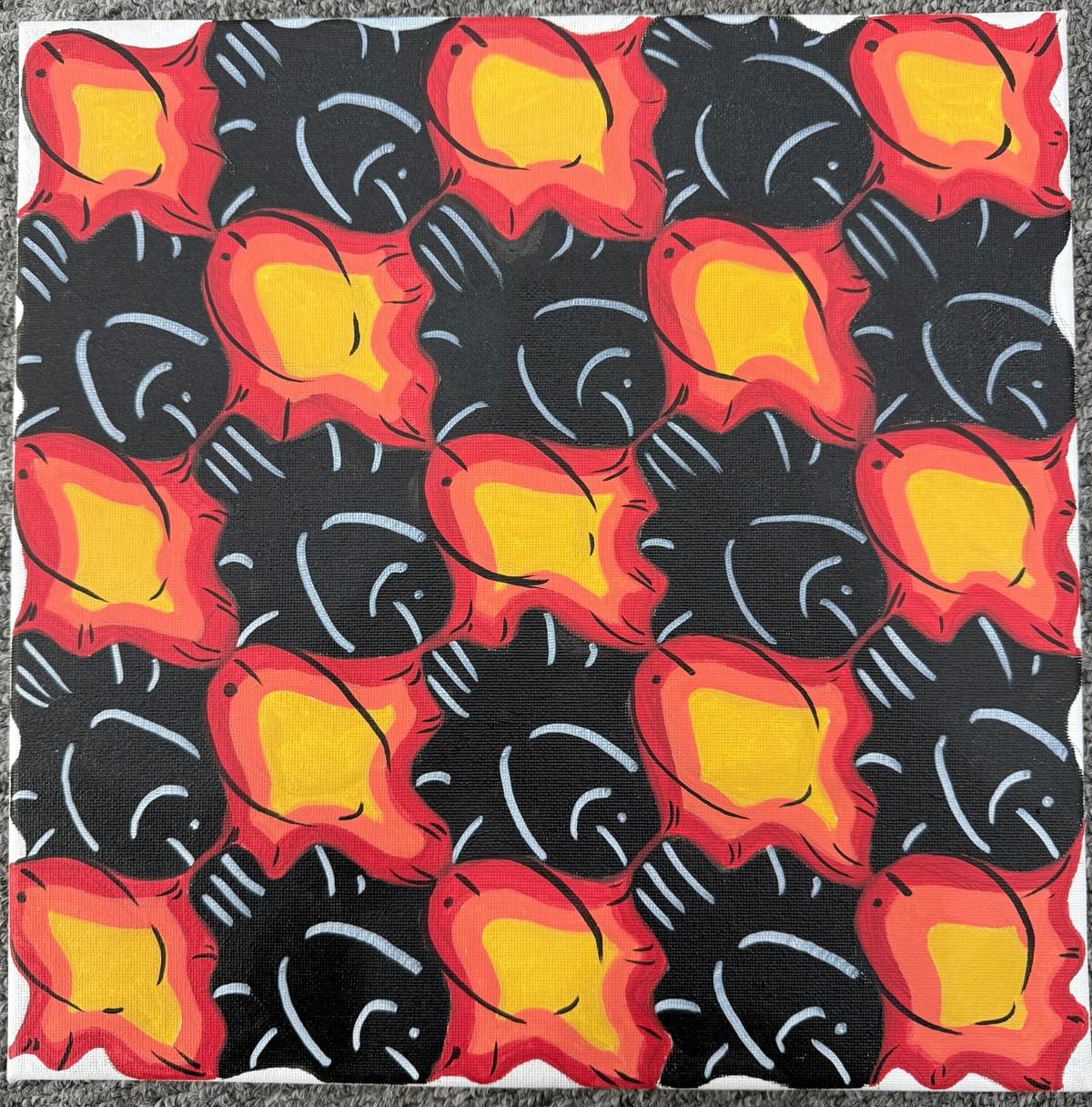
I experimented with the idea of tessellation artworks using fish shapes. Instead of leaving spaces between individual fish, I tried to make them connect with one another so that the pattern could continue across the whole canvas. I chose different colors for the fish because I wanted the repeated shapes to be easy to distinguish. I especially liked the contrast between the black fish and the warmer colors because it makes the repeating pattern more noticeable. This piece explored the mathematical structure behind tessellations and its connection to wallpaper patterns. The pattern depends on geometric relationships between the shapes and how they repeat across the plane.
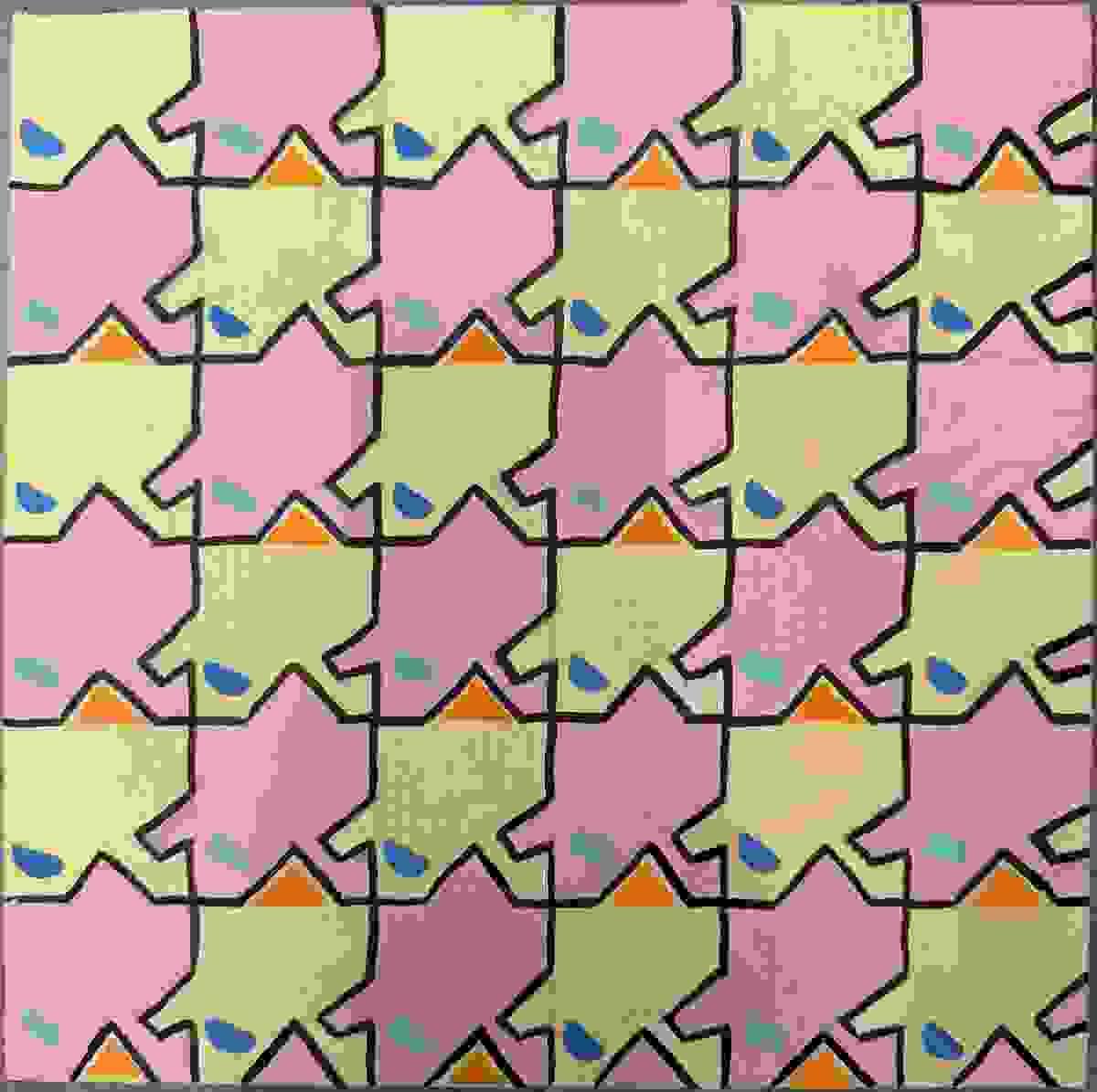
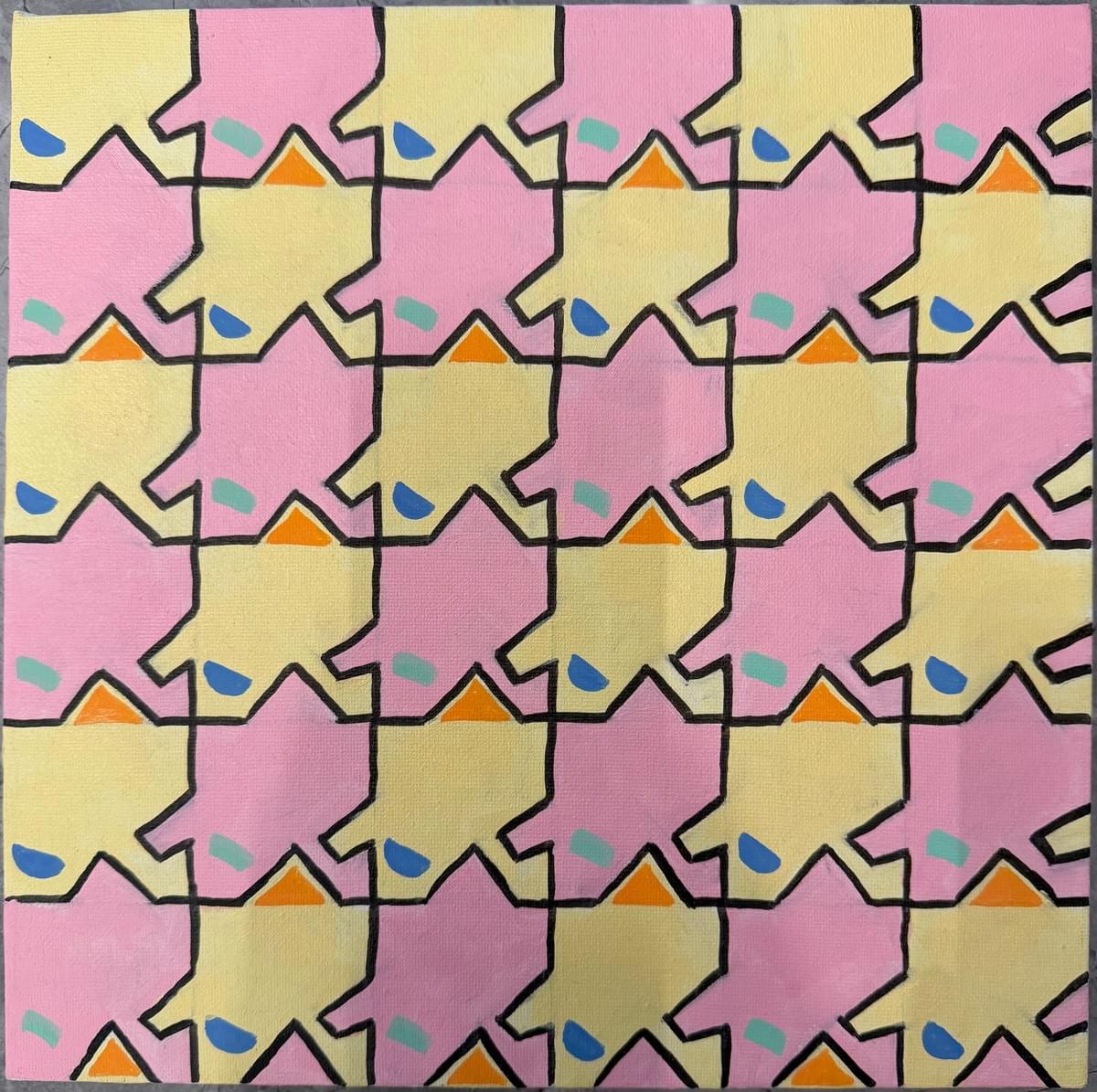
This piece similarly explored the mathematical structure behind tessellation. I used interlocking shapes so that one shape leads naturally into another instead of having each object exist separately. I chose pink and yellow to make the repetition more obvious, while adding smaller details so that the composition would not feel too repetitive.
Beauty of Symmetry
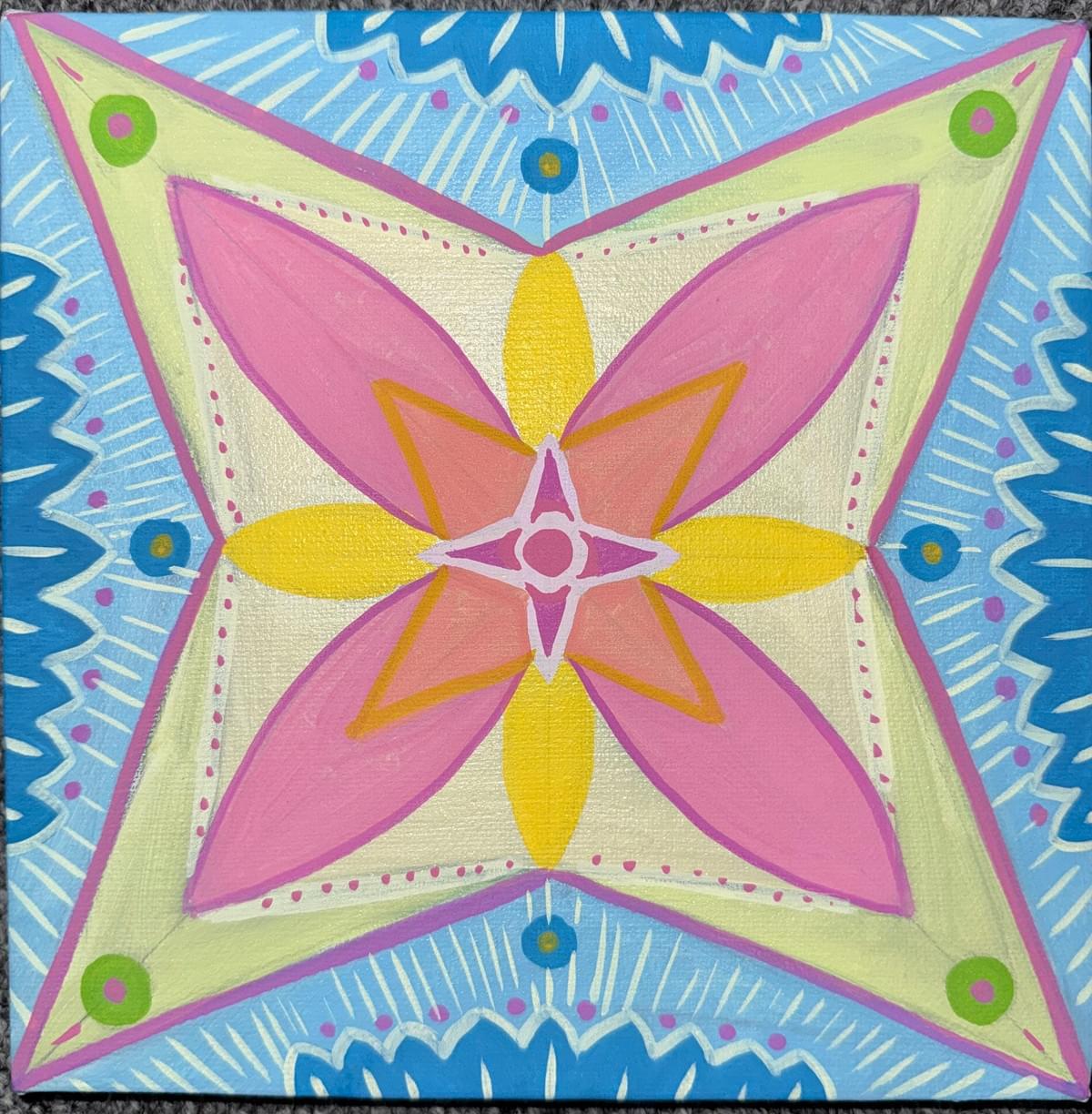
In this section, I explored how symmetry can connect mathematical structure with visual balance. In these pieces, I experimented with reflection, repetition, and mirrored forms using different colors, shapes, and techniques. I was fascinated by how a simple mathematical rule can create patterns that feel organized and harmonious. Through these works, I wanted to show that symmetry can be both a mathematical concept and a creative tool in art.
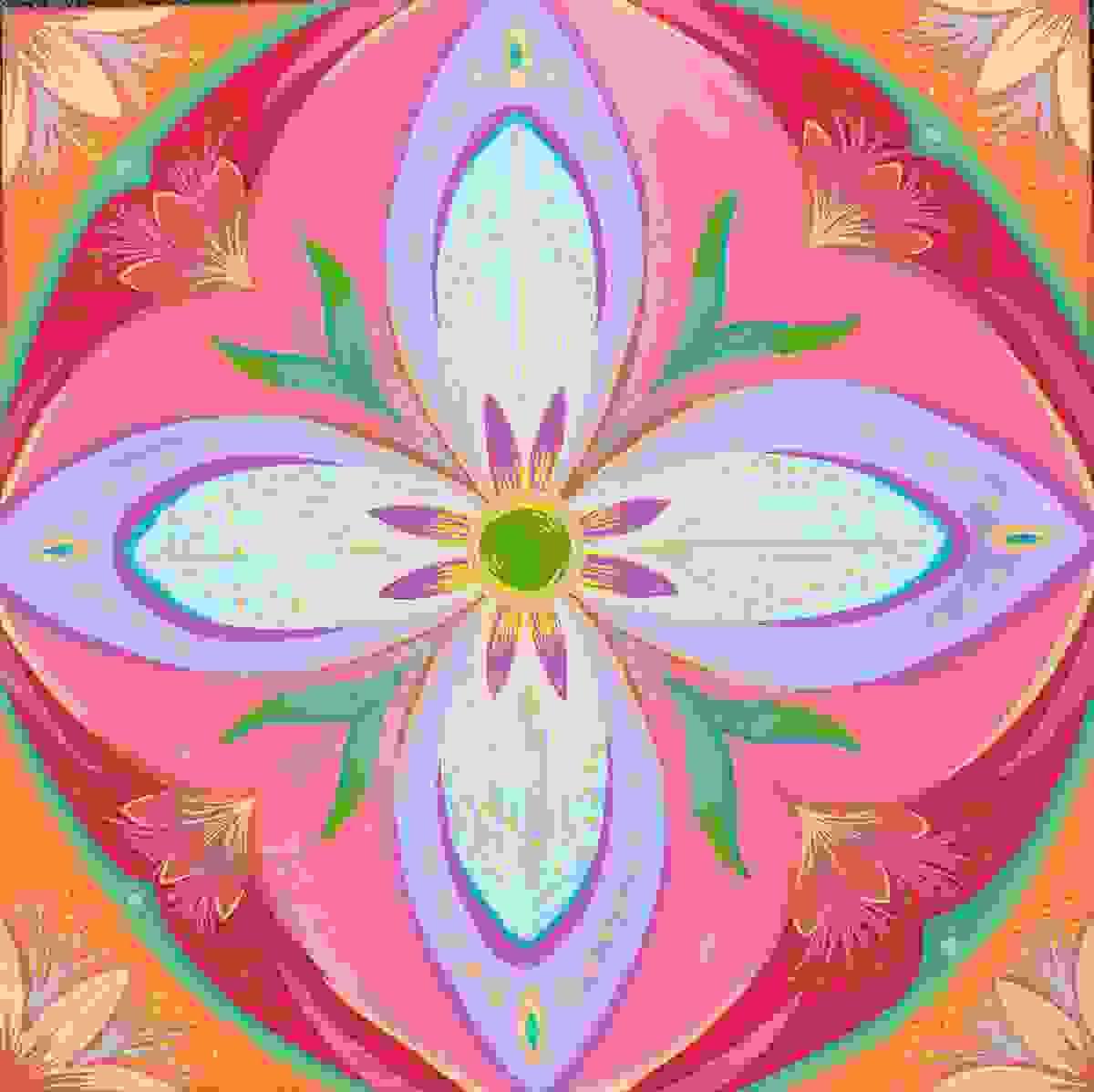
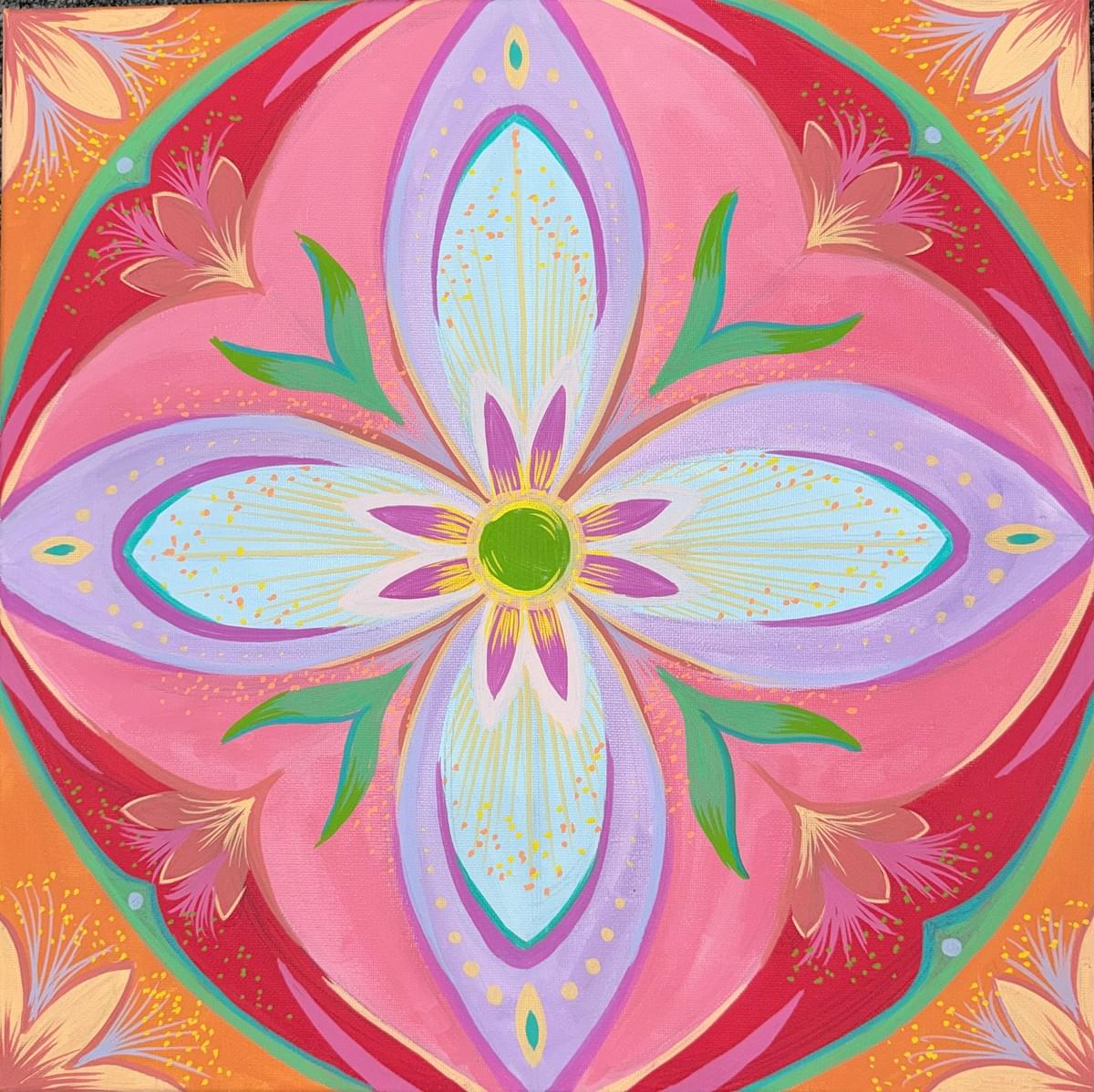
I explored how symmetry could be used to create a balanced and organized composition. I started with a central point and reflected the shapes, colors, and patterns across the vertical and horizontal axes. I used repeated floral forms because I liked how they could create beauty while still following a clear mathematical structure. As I worked on the piece, I paid attention to how each side related to the others. I liked that a simple mathematical idea like reflection could give me a structure for the whole painting. Through this piece, I wanted to show how symmetry can create harmony in art while also making the mathematical relationship between different parts visible.
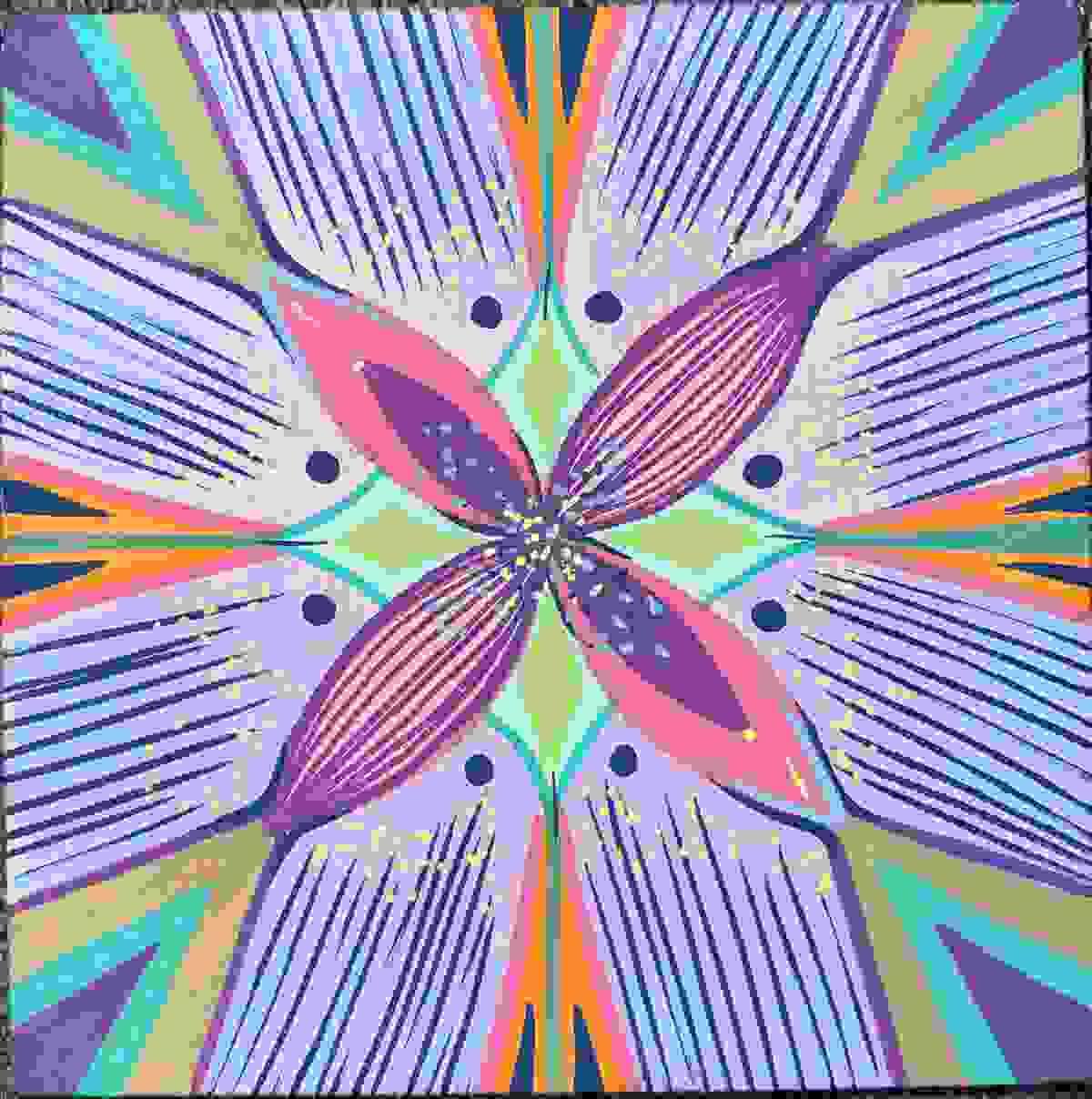
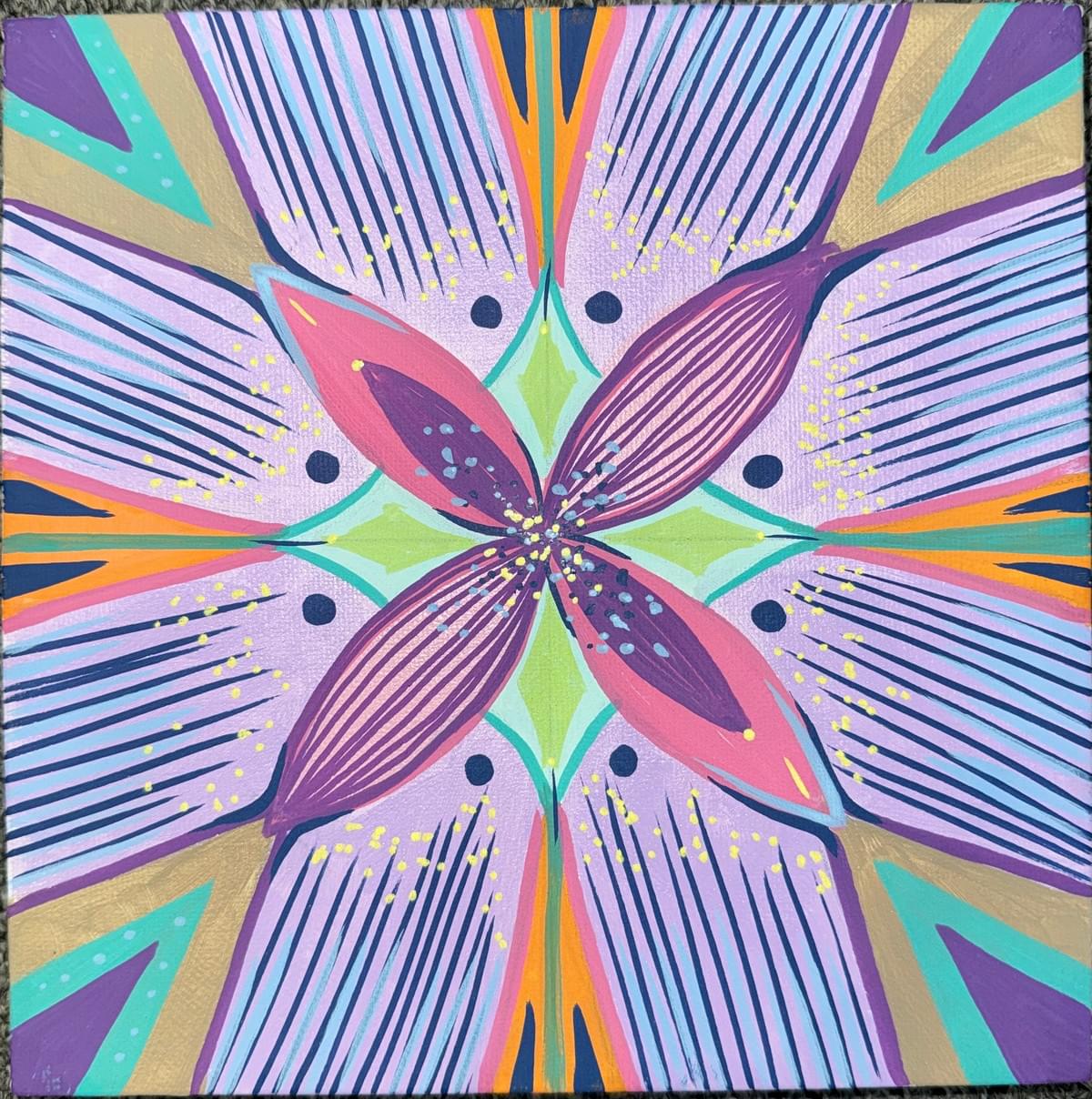
Through this piece, I explored how axial symmetry could create a balanced composition. I mirrored the shapes, colors, and patterns across the vertical and horizontal axes, using repeating lines and petal-like forms to create harmony and rhythm. I chose purple and brighter colors because I wanted the painting to feel more lively and visually appealing.
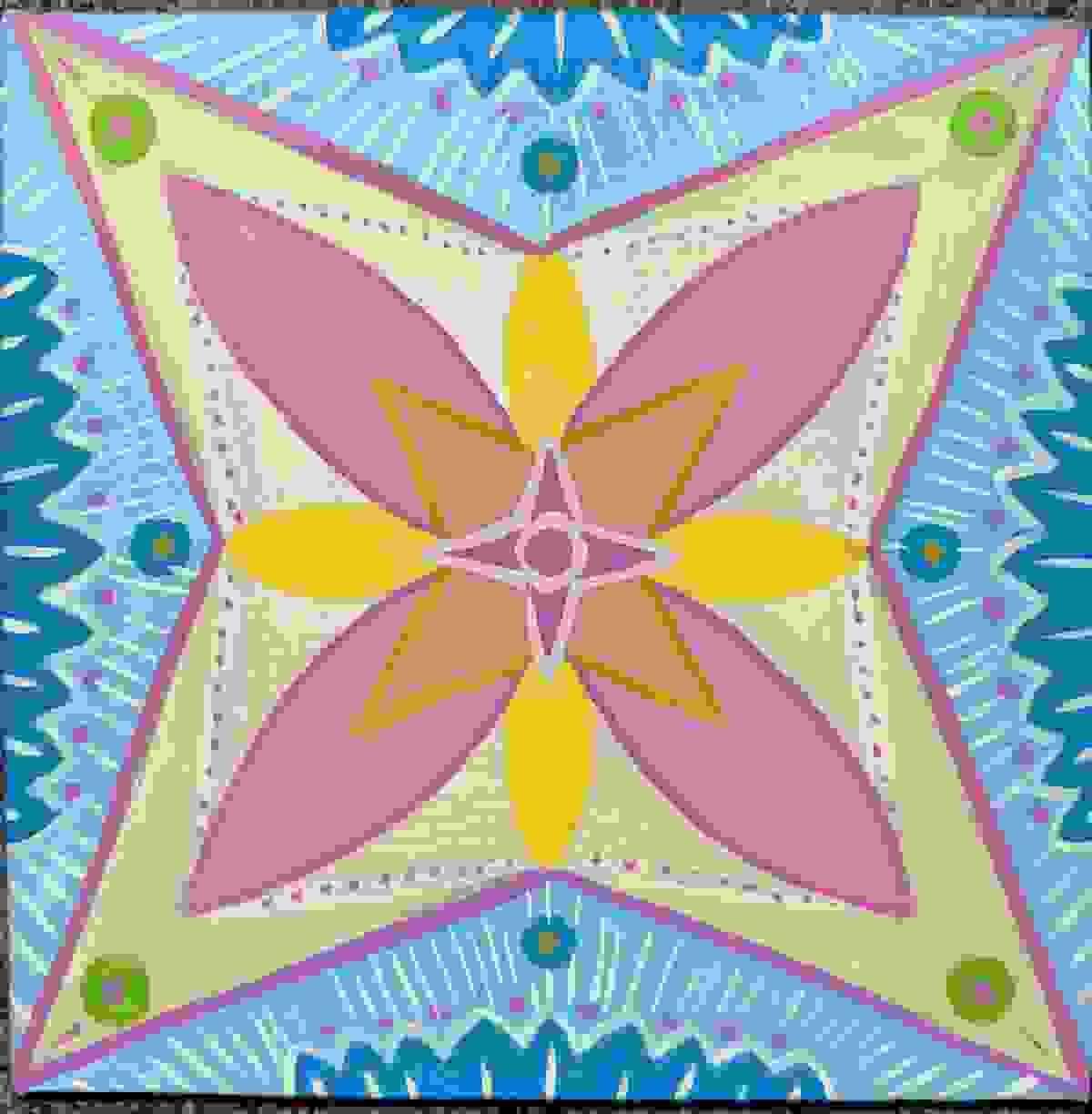
This piece similarly explored how mathematical ideas like symmetry can guide artistic composition. I used blue and pink as the main colors because I wanted to create a soft but visually balanced feeling.
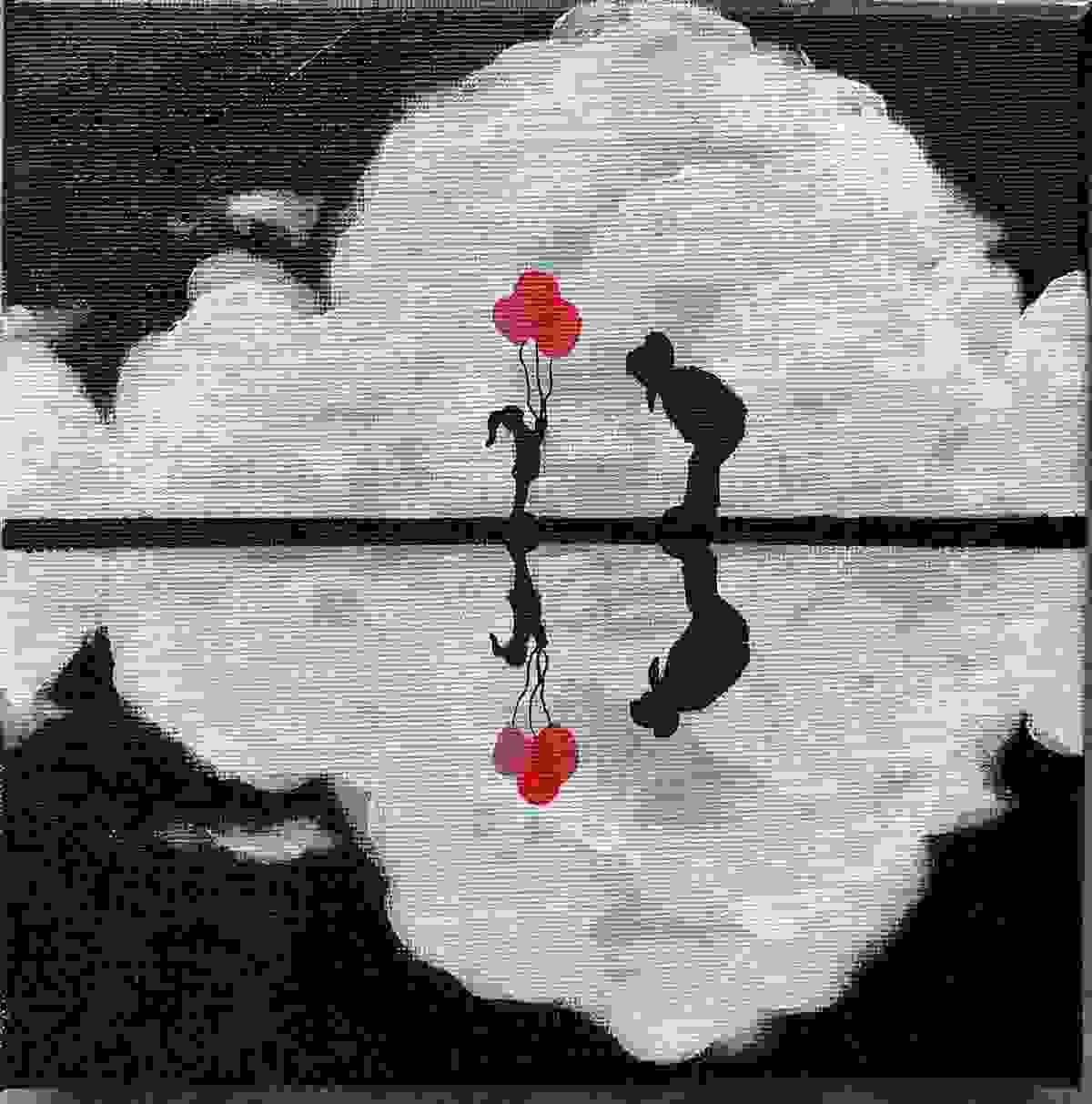
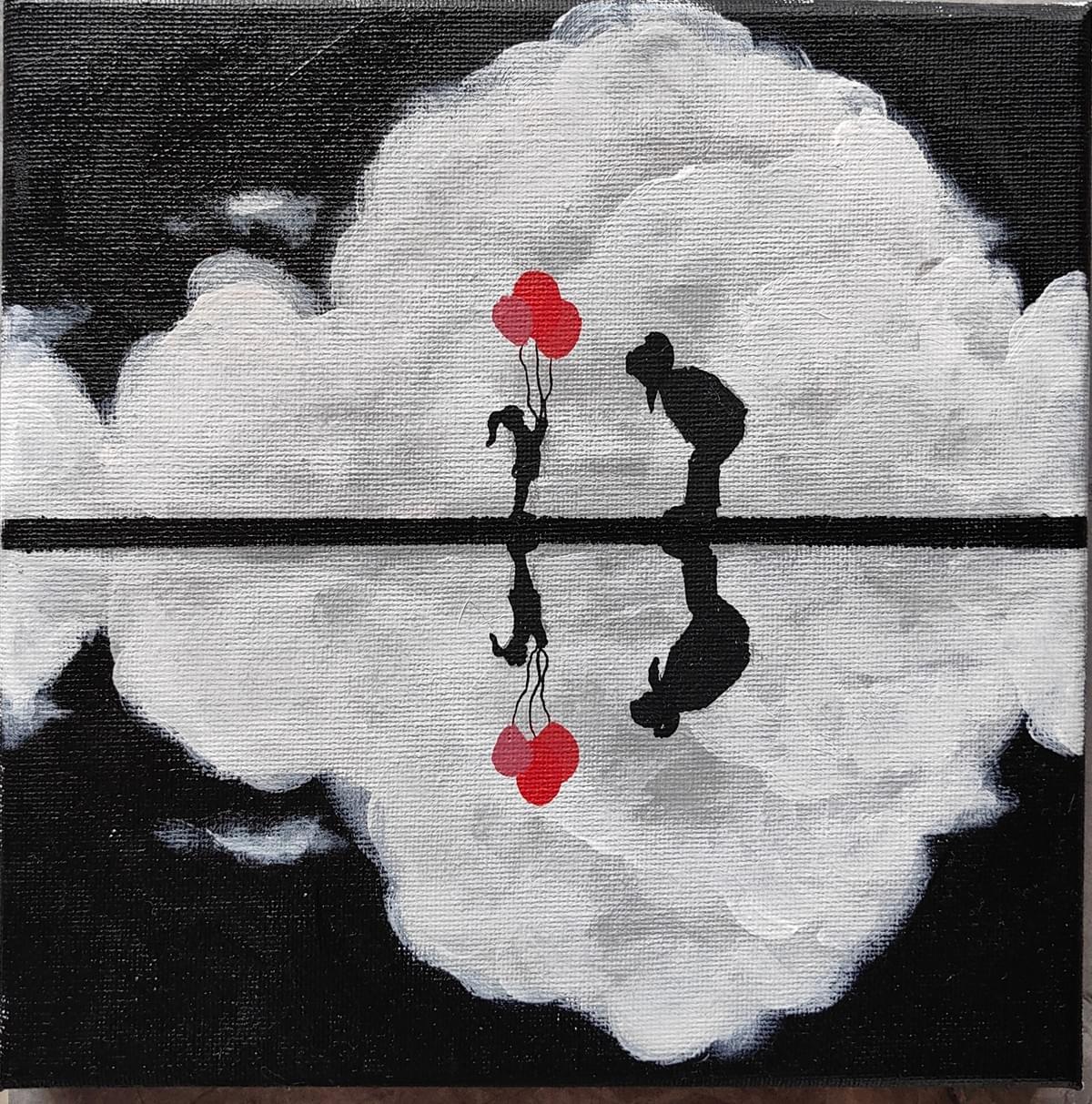
For this painting, I explored symmetry through the idea of a mirror reflection. I arranged the shapes so that one side reflects the other, creating a balanced composition. I liked the idea that a simple mathematical transformation—reflecting one side onto another—could become the main organizing principle of an artwork.
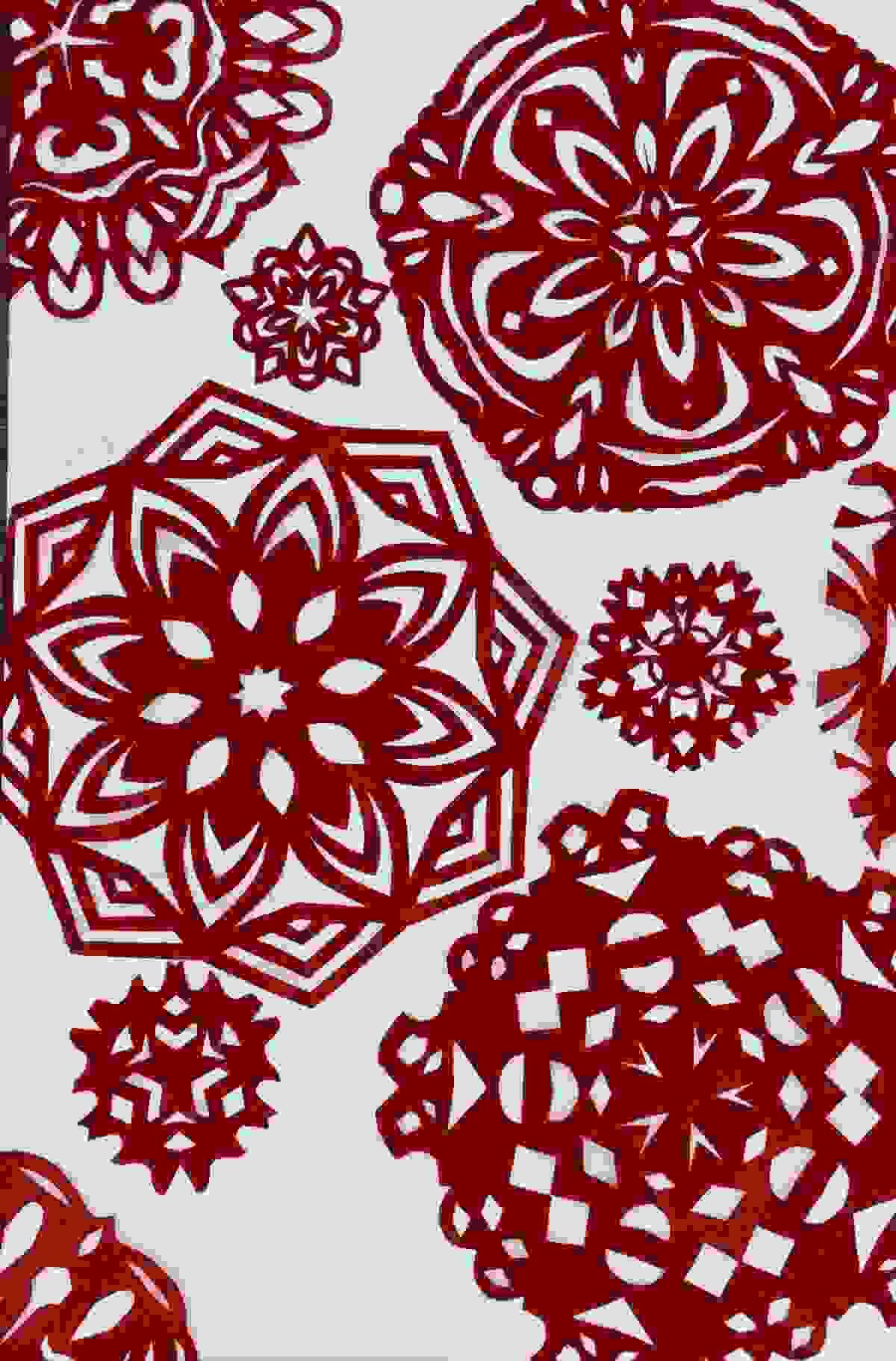
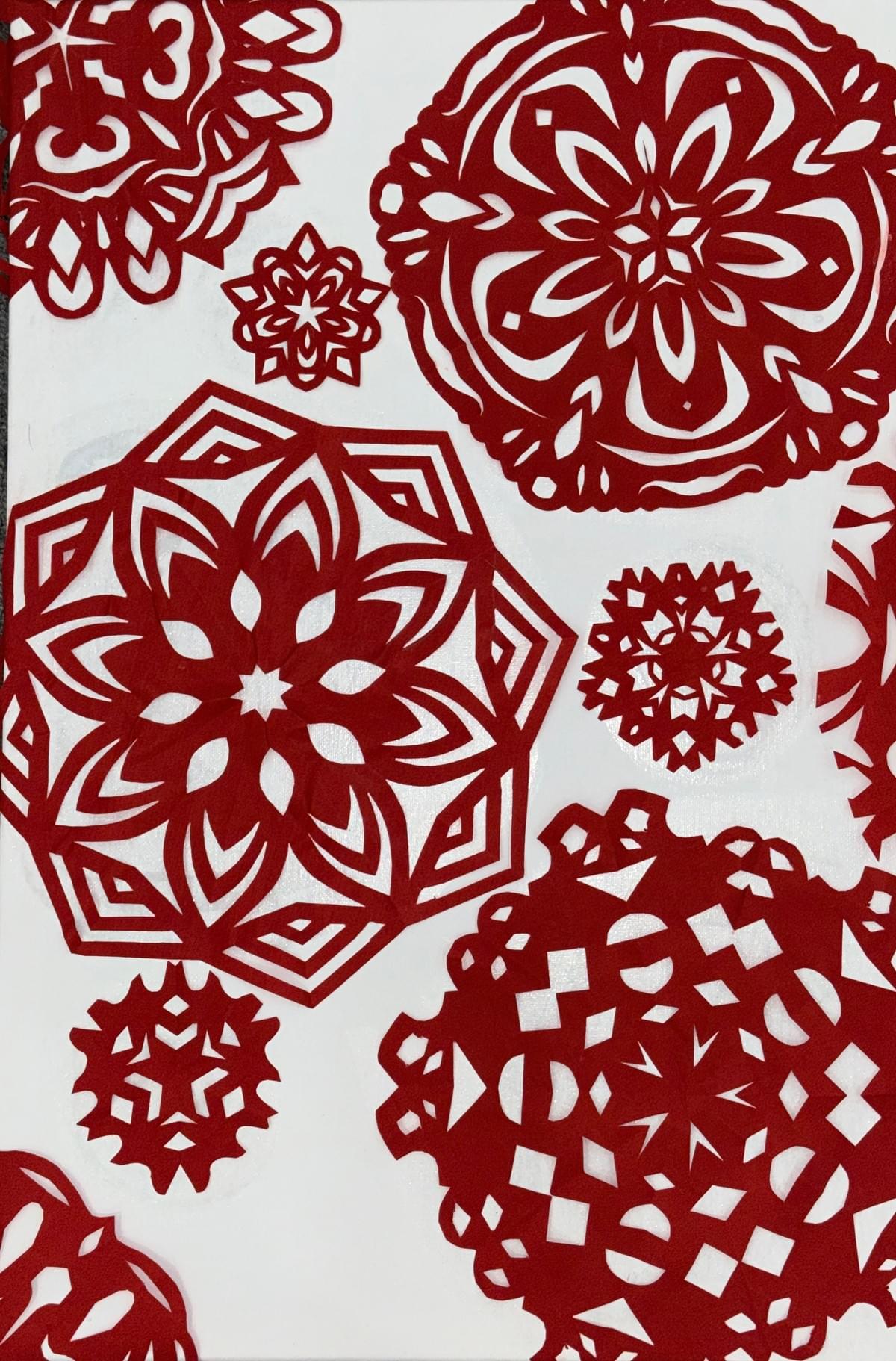
For this piece, I used the technique of paper folding and cutting. I was curious to see what would happen if I create symmetry through a physical process rather than drawing both sides separately. I folded the paper and cut through it, allowing the same cuts to appear on opposite sides. What fascinates me is the fact that the symmetry emerged naturally from this process. Through this piece, the mathematical idea feels more connected to the act of creating.
Imperfect Symmetry
In this section, I wanted to show how symmetry does not always have to be perfect. I studied the work of Mitch Scott and Sarah Kiser to learn how small differences in color, shape, and details can make a symmetrical composition feel more interesting. In my own pieces, I experimented with keeping the main structure balanced while introducing differences between the two sides. Through these works, I wanted to show that even when something is mathematically symmetrical, small imperfections can create a more dynamic artwork.
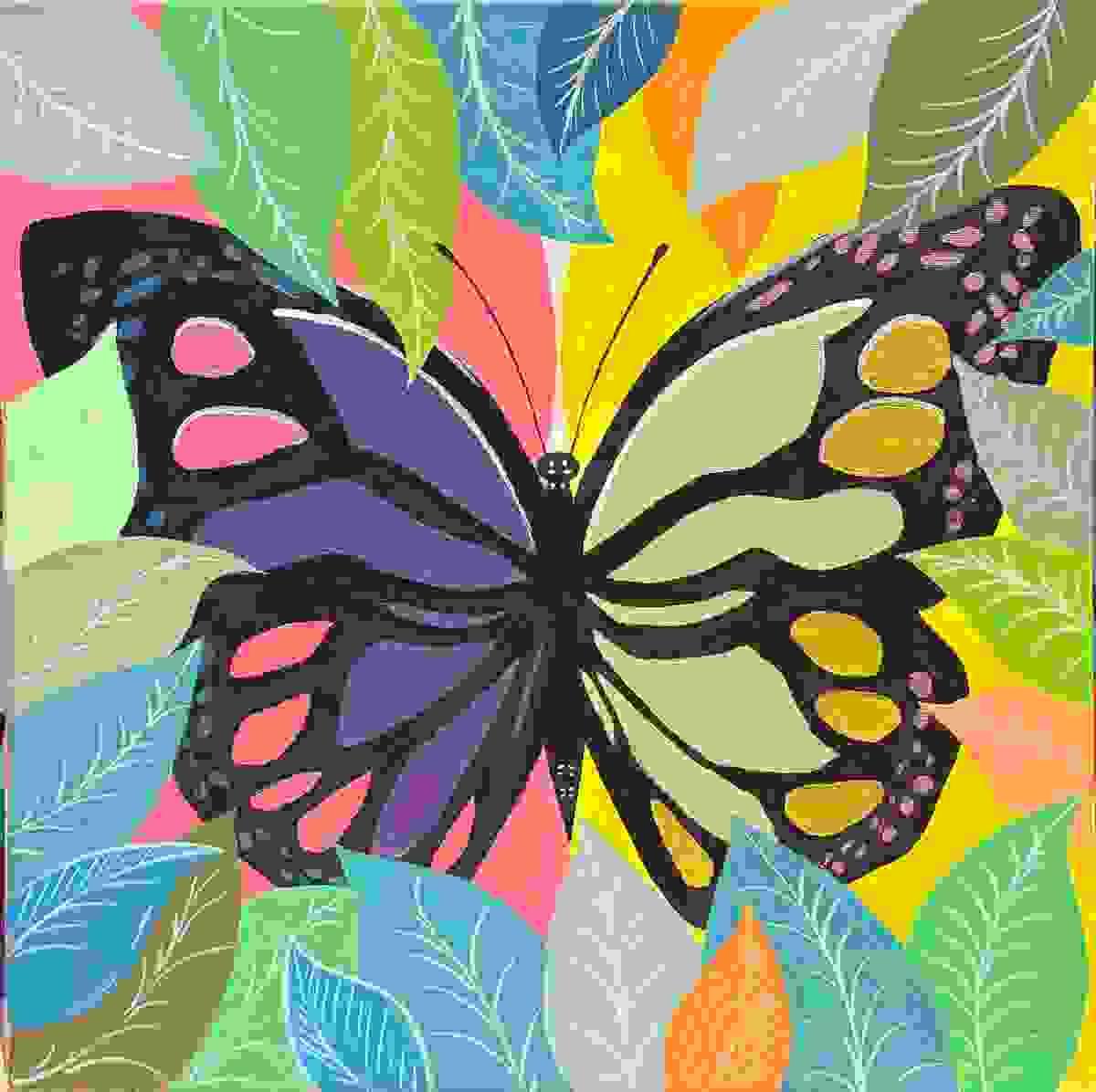
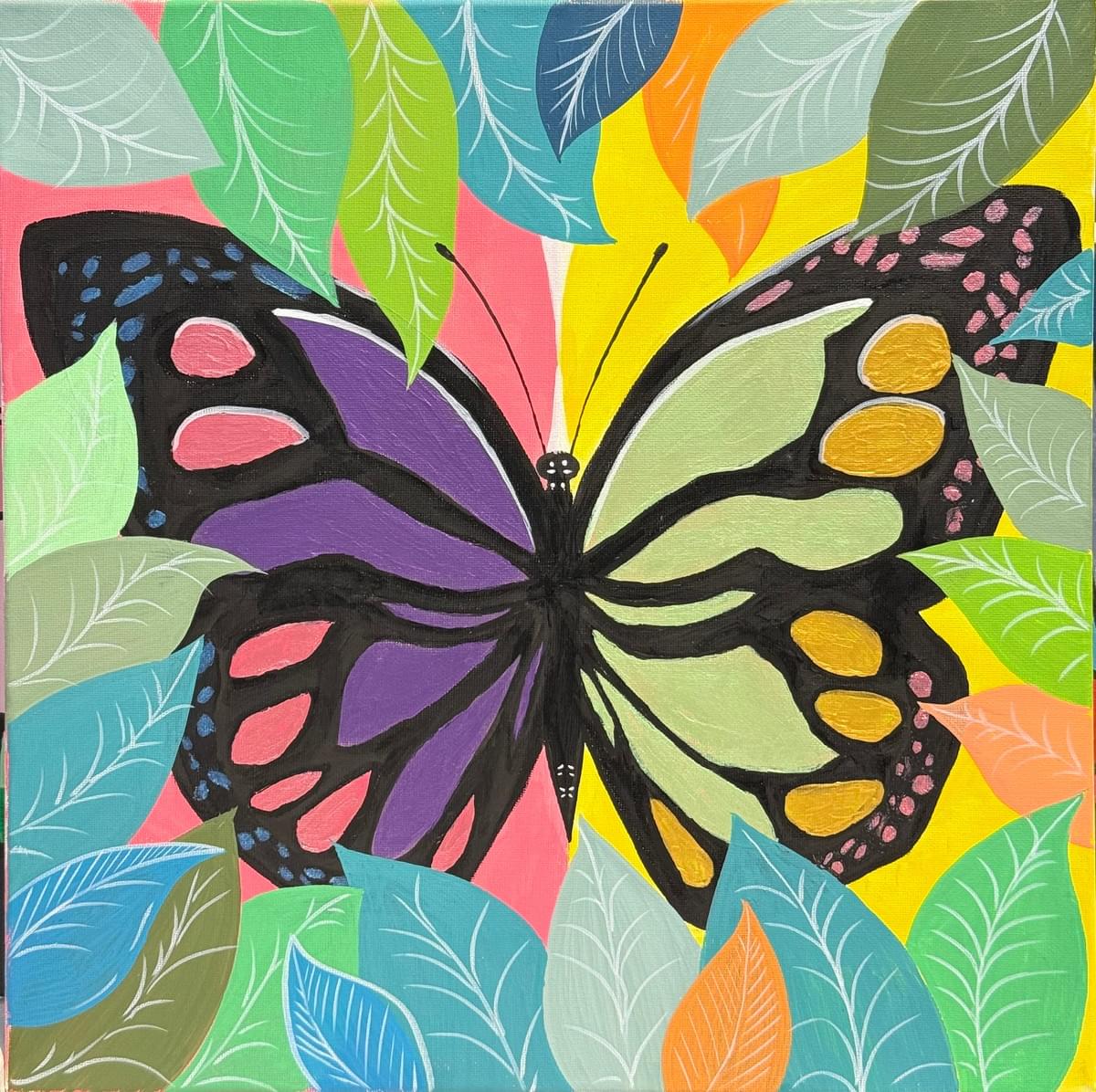
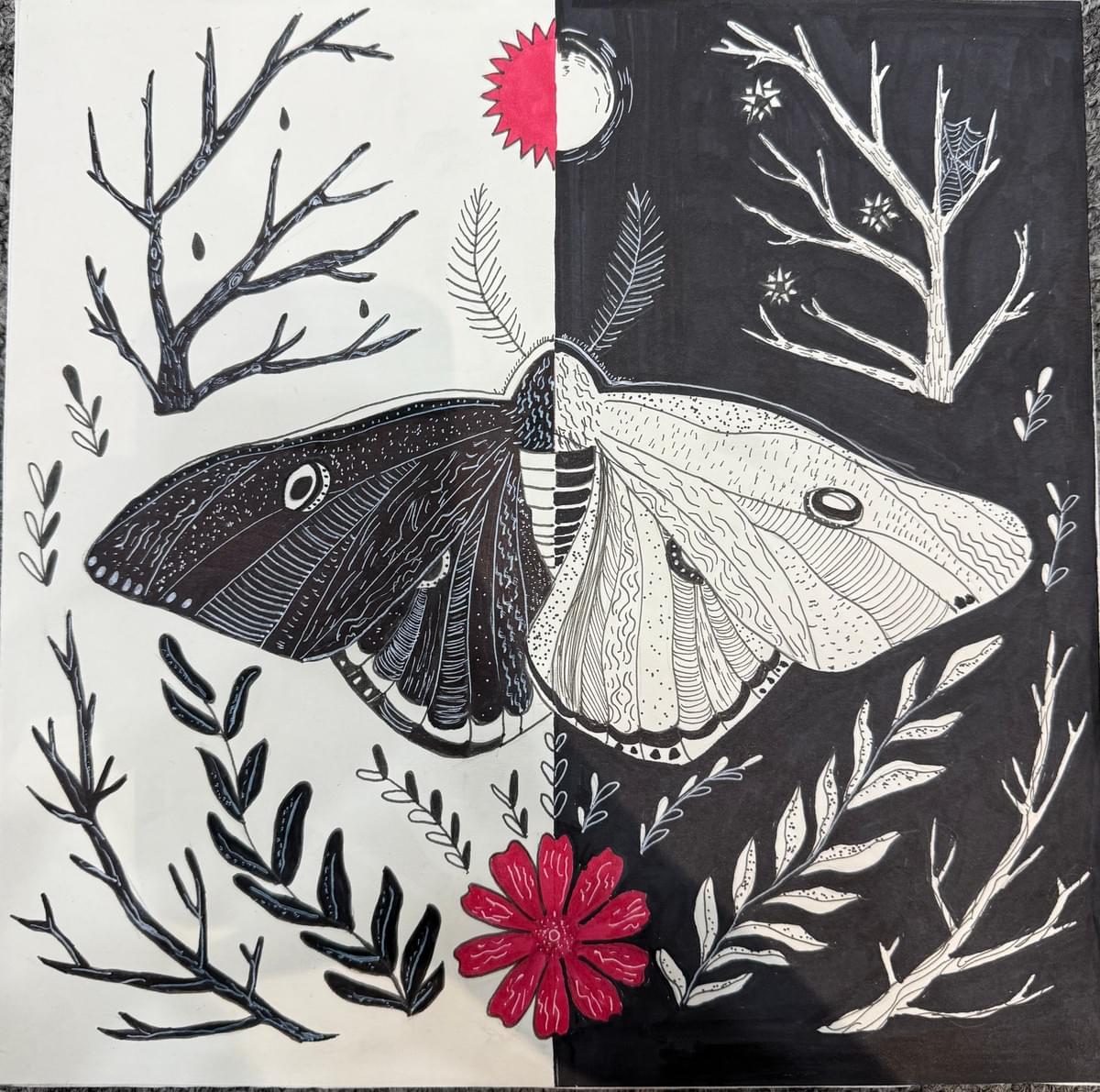
I created a butterfly with clear bilateral symmetry and placed it at the center of the composition. Even though the butterfly’s shape is symmetrical, I used different colors on the left and right sides to make the symmetry imperfect. Around it, I added leaves with more irregular shapes. I wanted the butterfly to feel structured and balanced while the leaves felt more natural and unpredictable. I think the contrast between these parts makes the painting more interesting because the composition is neither completely symmetrical nor completely random.
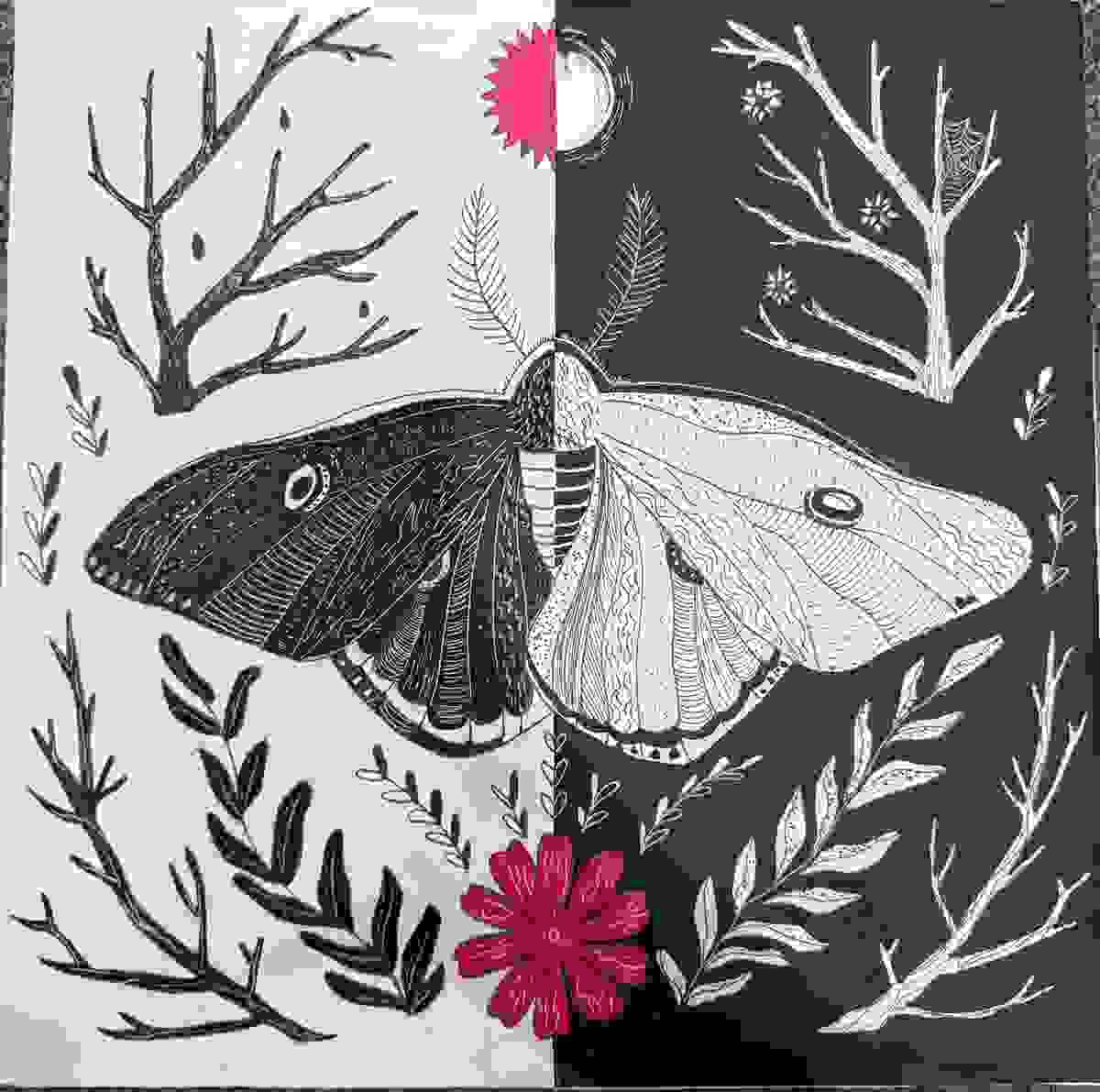
(Sarah Kiser)
I recreated this piece based on Sarah Kiser’s work. The composition is centered around a moth, with the shapes on the left and right sides mirroring each other. However, the black on one side and white on the other creates a contrast within the symmetrical structure. It shows how a composition can remain symmetrical in shape while becoming imperfect through differences in color.
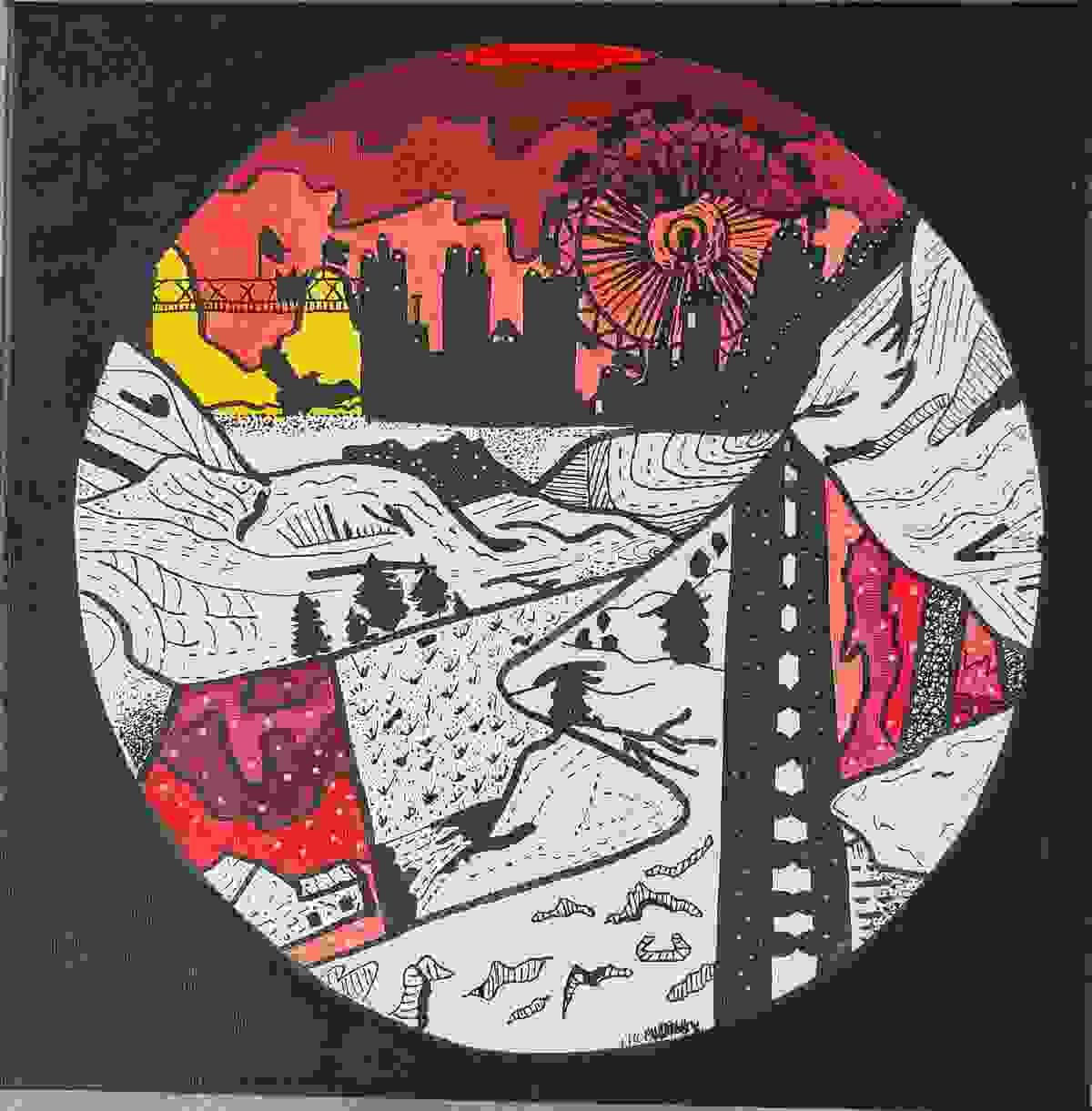
(Mitch Scott)
I recreated this piece based on Mitch Scott’s work because I wanted to learn how he uses imperfect symmetry.
Cubism and Mathematical Structure
In this section, I explored the idea that meaning can come from the relationships between different parts rather than from the parts themselves. This connects to the mathematical idea behind Galois groups, where the structure and relationships between elements are what give the system its meaning. I saw a similar idea in Picasso’s Cubism, where an object can be broken into separate shapes and rearranged into a new composition. Through my own paintings, I experimented with fragmenting familiar subjects and rebuilding them using geometric shapes, different angles, and bold colors. I wanted to show how the relationships between different parts of an object could still allow the viewer to recognize the original subject, even when it was no longer represented realistically.
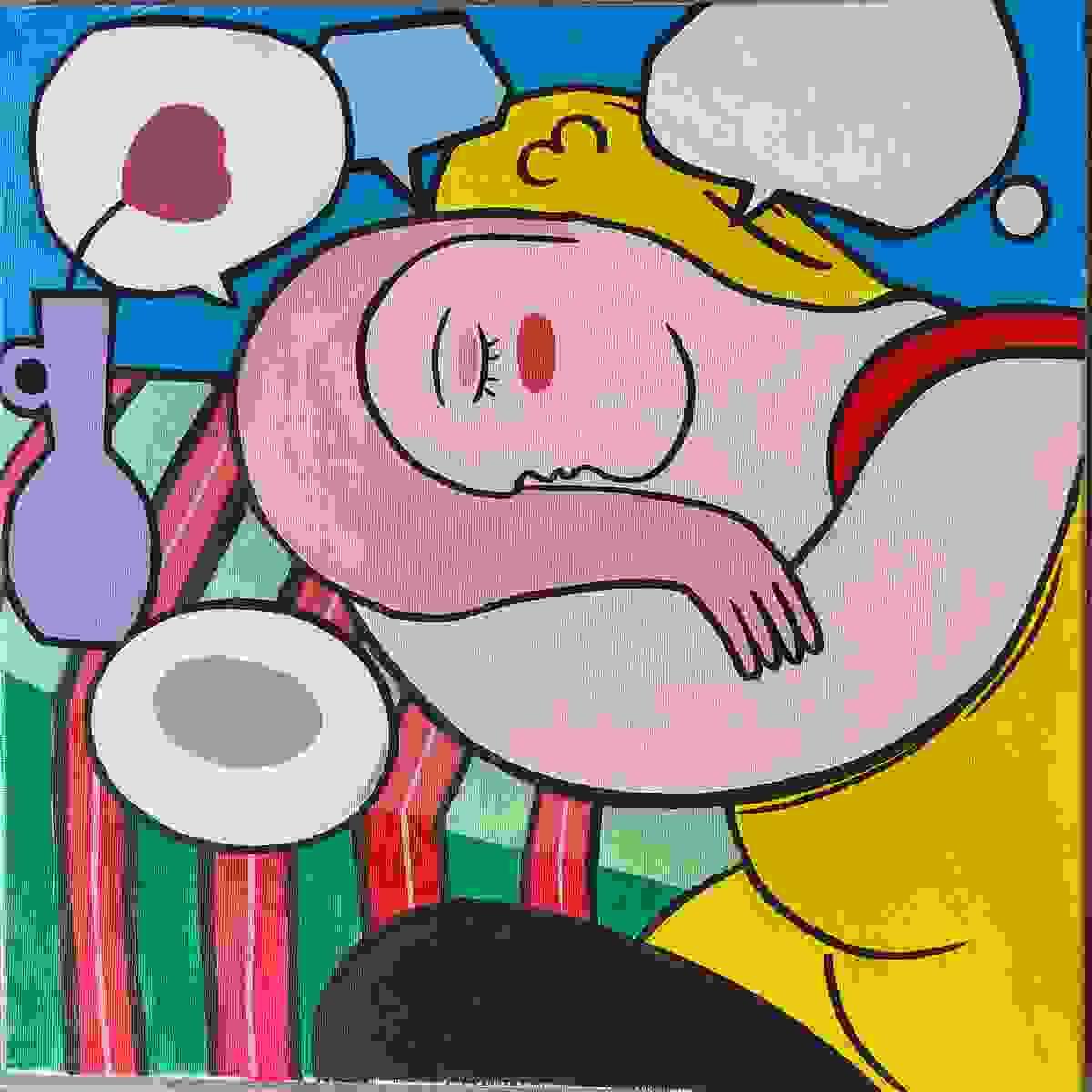
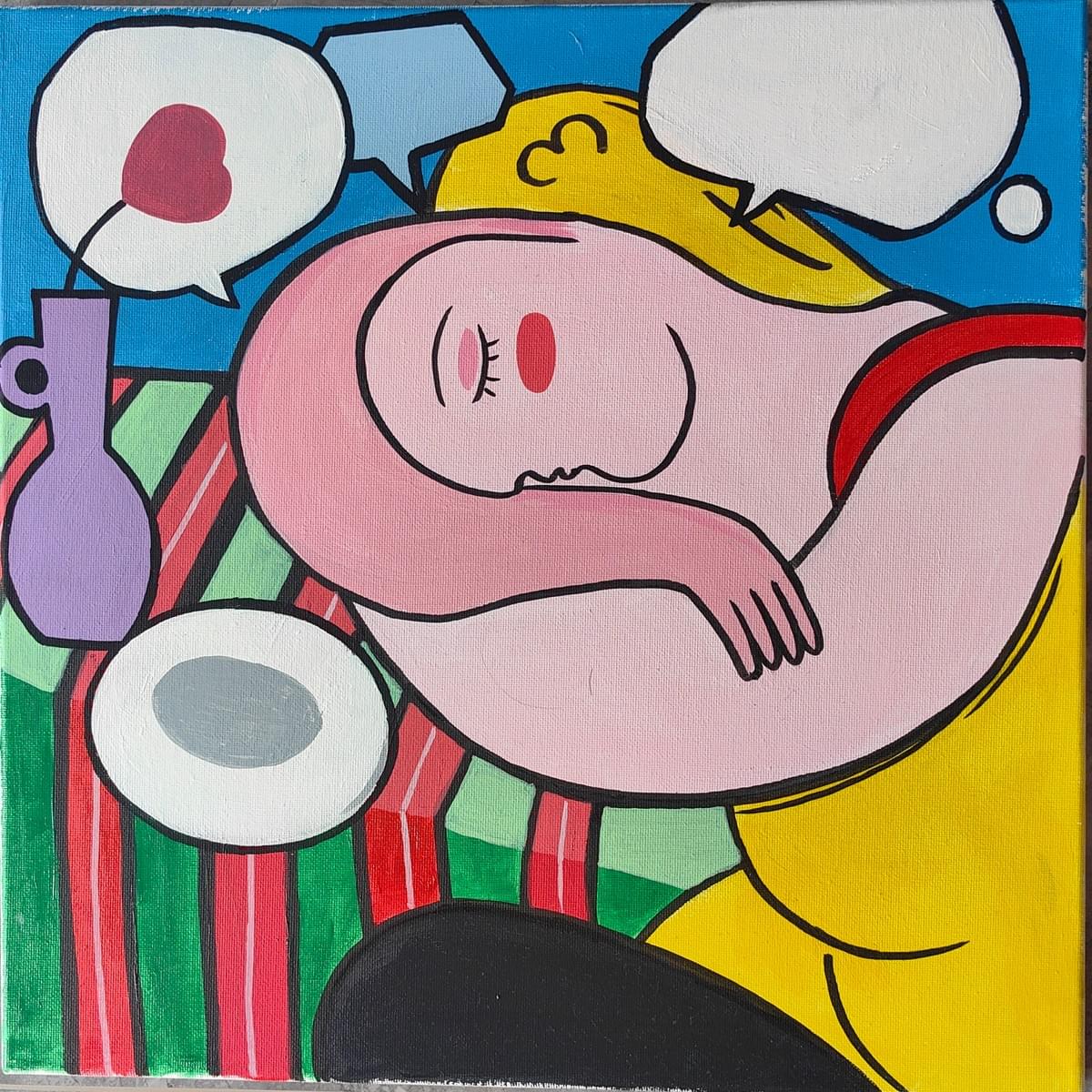
I experimented with Picasso’s Cubist style by using bold, dopamine-inspired colors and breaking the composition into different parts. In the center, I placed a woman lying down with her eyes closed, with a vase of flowers on the table beside her, and added a speech bubble to represent what she might be thinking. I wanted these elements to work together to suggest that she is resting while thinking about something. The relationships between all these different elements could create meaning, even though the individual shapes did not represent anything on their own. Her hair and hand are connected together as part of the same structure, making the different parts of the figure interact with each other. The arrangement of the shapes and objects created a sense of emotion and narrative.
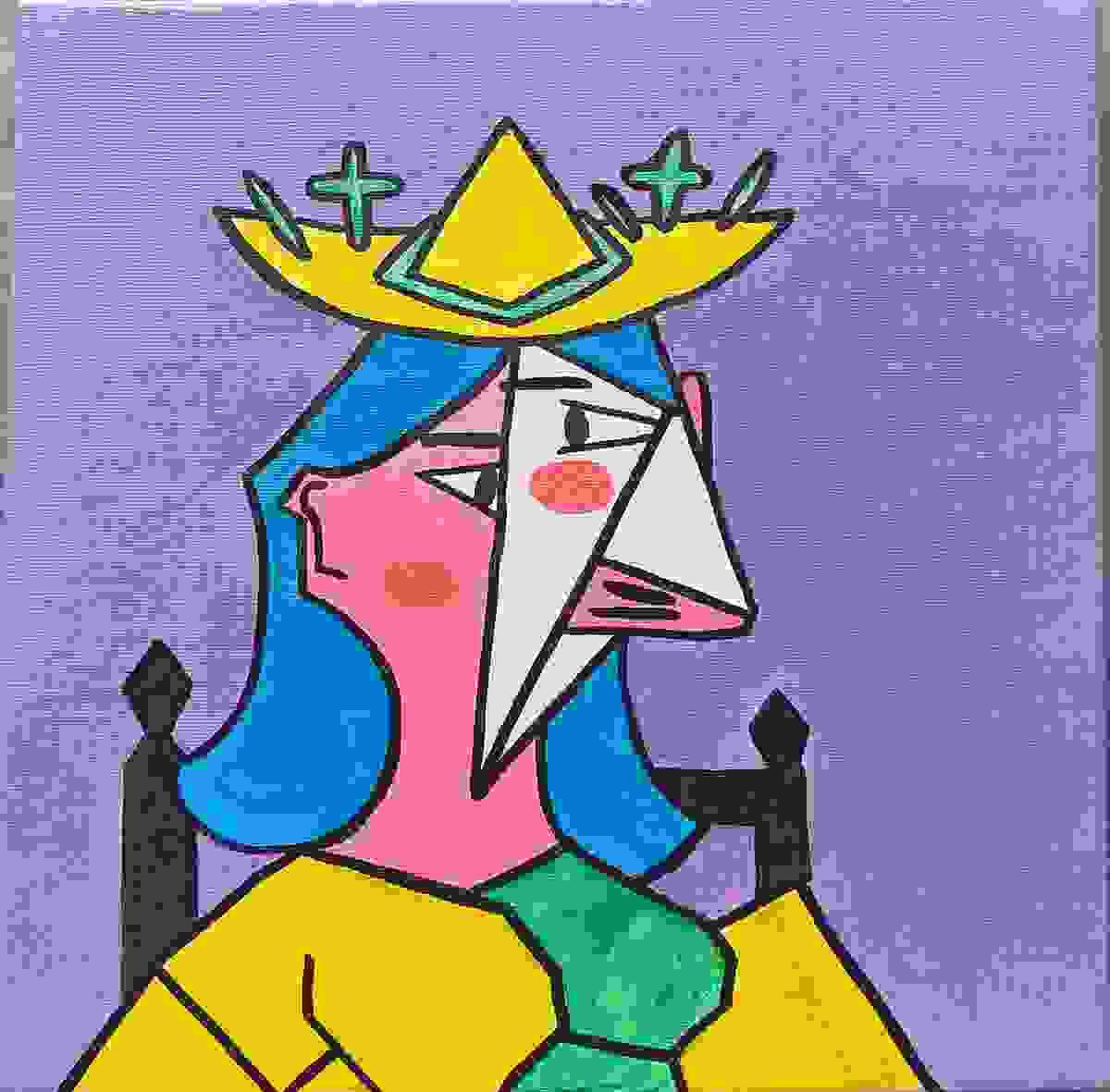
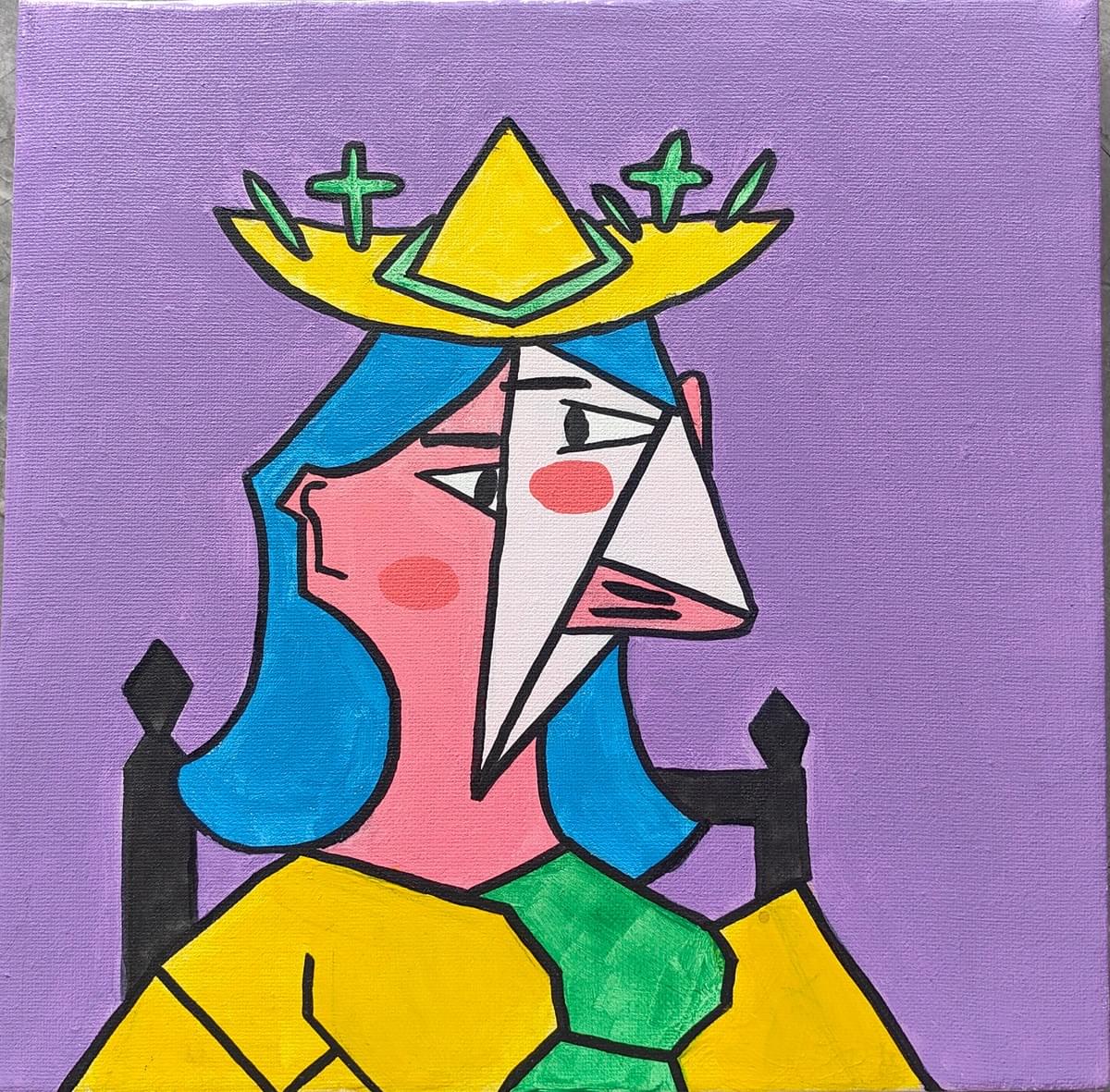
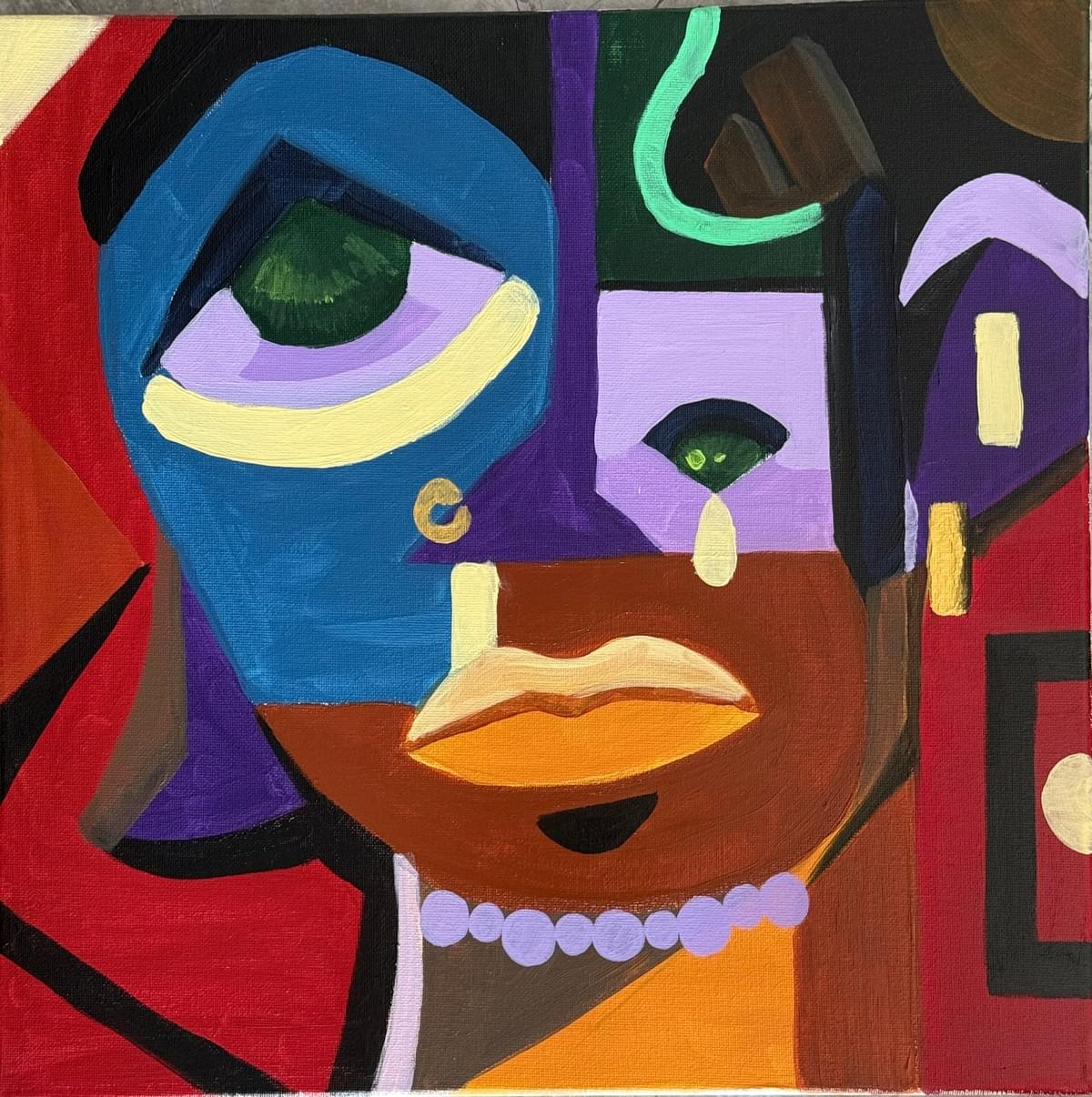
I experimented with Pablo Picasso’s Cubist style by creating a purple background and placing a fragmented human face in the center. Instead of drawing the face in its normal form, I rearranged its different parts and perspectives into a new composition. Even though the features are not positioned realistically, the face is still recognizable. Through this piece, I wanted to show how changing the structure of an image can create something abstract while still keeping its original meaning.
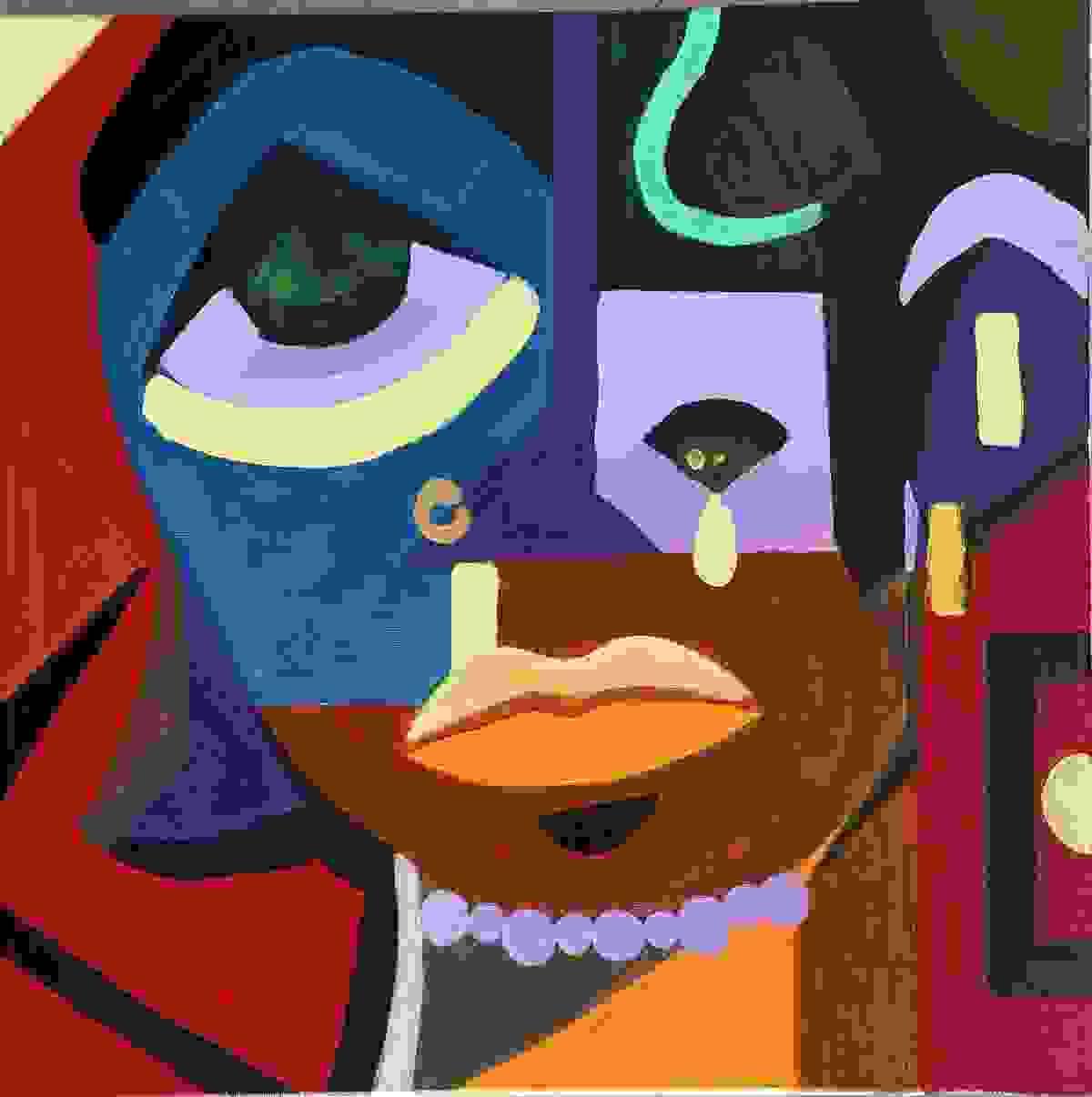
For this painting, I experimented with fragmenting a human face. I divided the face into different sections and rearranged them into an abstract composition. I wanted the viewer to recognize the face without being given a single realistic representation of it. I chose a darker, Gothic-inspired color palette because it could create a more dramatic atmosphere. I think the contrast between the fragmented structure and the darker colors makes the face feel more mysterious, while still keeping the Cubist idea of breaking and rebuilding a form.
Geometric Elements
In this section, I explored how mathematics and art can come together through simple geometric shapes. I started with basic forms such as circles, triangles, rectangles, and trapezoids, and experimented with how they could be arranged to create recognizable images with balanced compositions. Something as simple and structured as a geometric shape could become a creative tool rather than just a mathematical object.
As I worked on these pieces, I began to see geometry as a kind of visual language. The shapes gave my paintings structure, but I still had the freedom to change their sizes, colors, and positions. I wanted to show that mathematical structure can give us a foundation from which we can experiment and create.
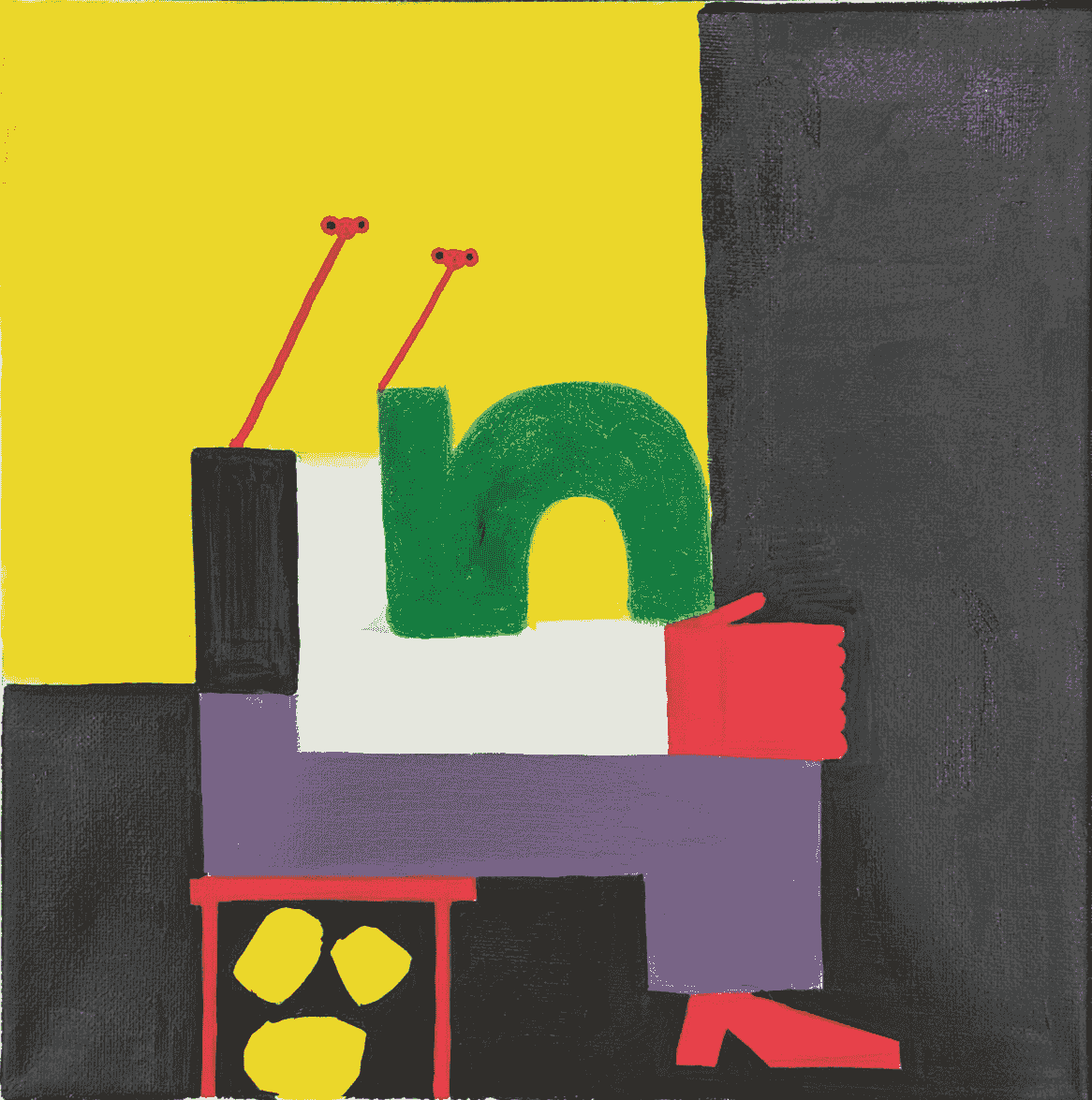
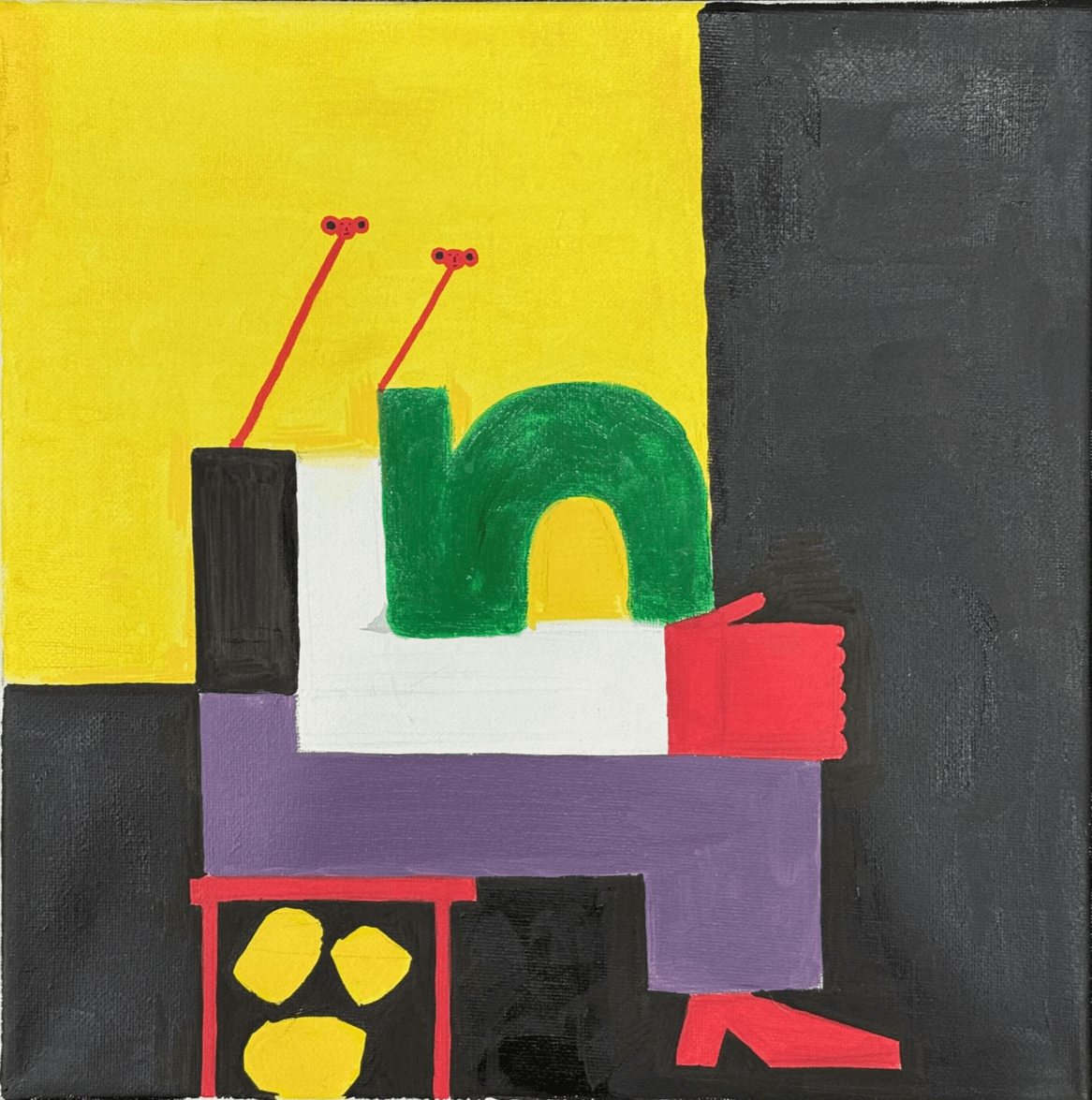
(ZEBU)
I recreated this piece based on ZEBU’s work because I wanted to explore how simple geometric shapes could be used to create something that still feels like a recognizable image. The background is bright yellow and black becauseit can create a strong contrast with the purple, red, and green shapes in the foreground. Through this painting, I could see how mathematical ideas such as shape, proportion, and spatial relationships could become part of an artistic composition.
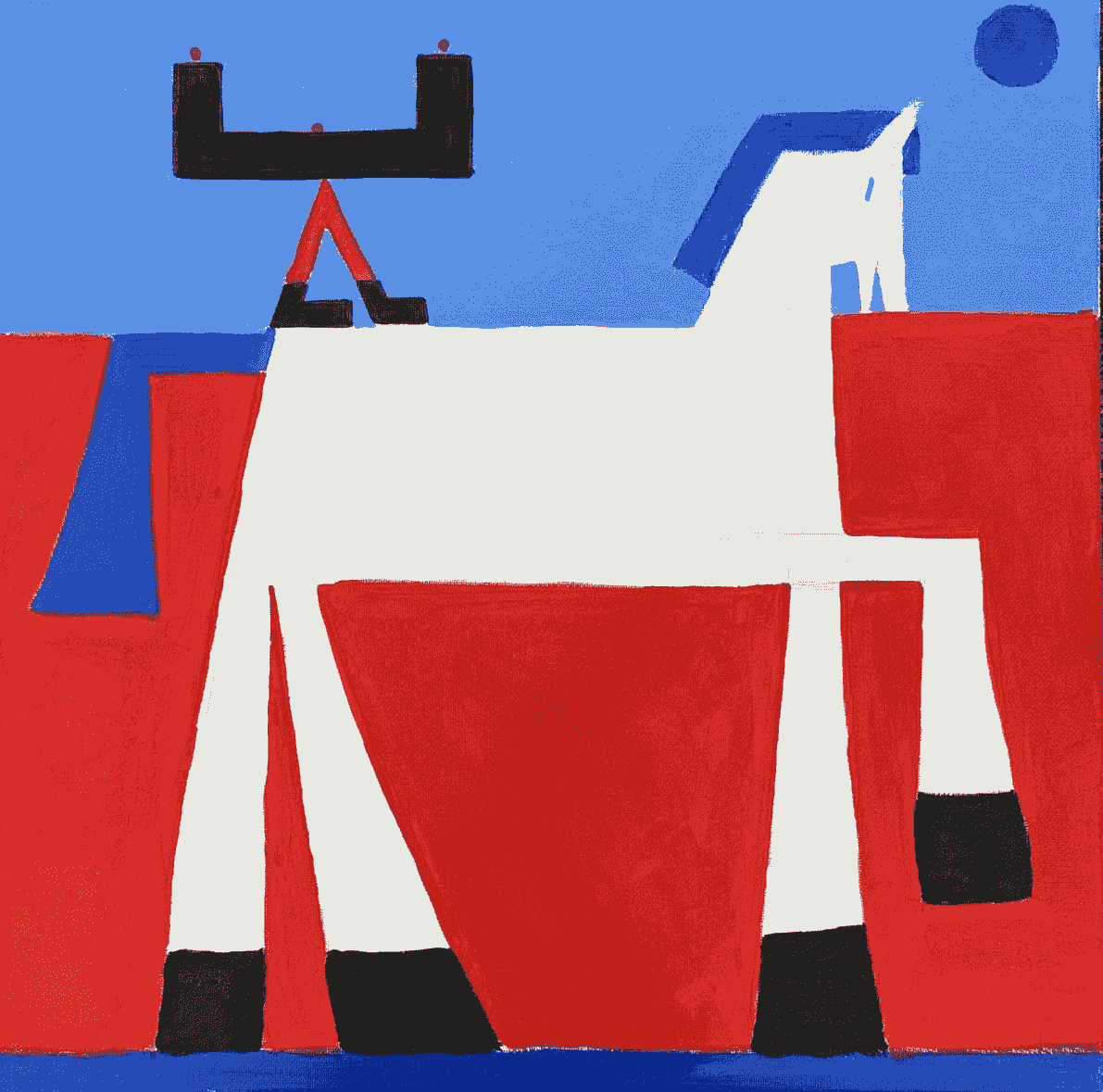
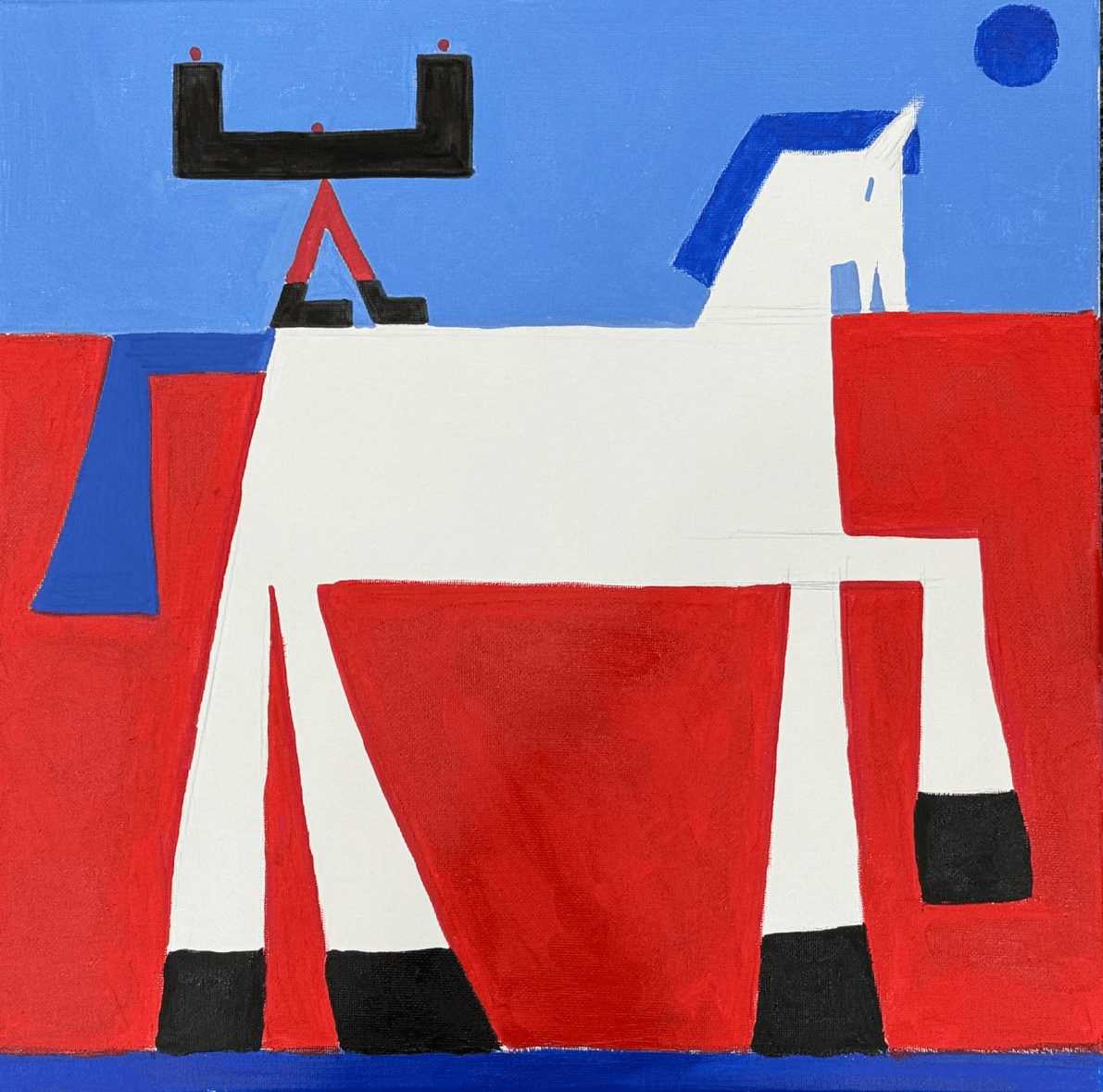
(ZEBU)
I recreated this piece based on ZEBU’s work. The body of the horse is constructed from triangles, rectangles, trapezoids, and other basic forms. I was interested in the idea that something recognizable does not always have to be drawn realistically.
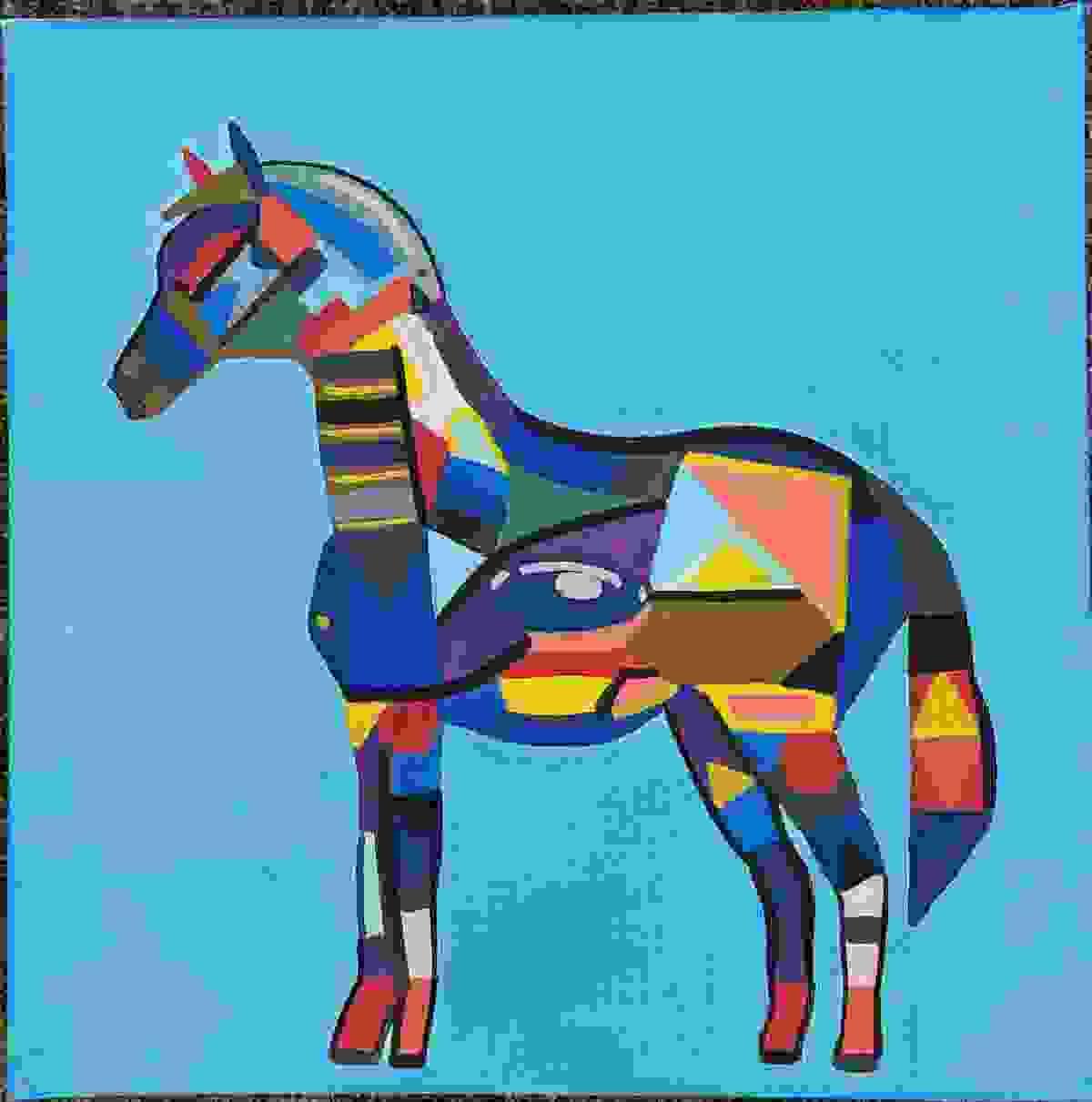
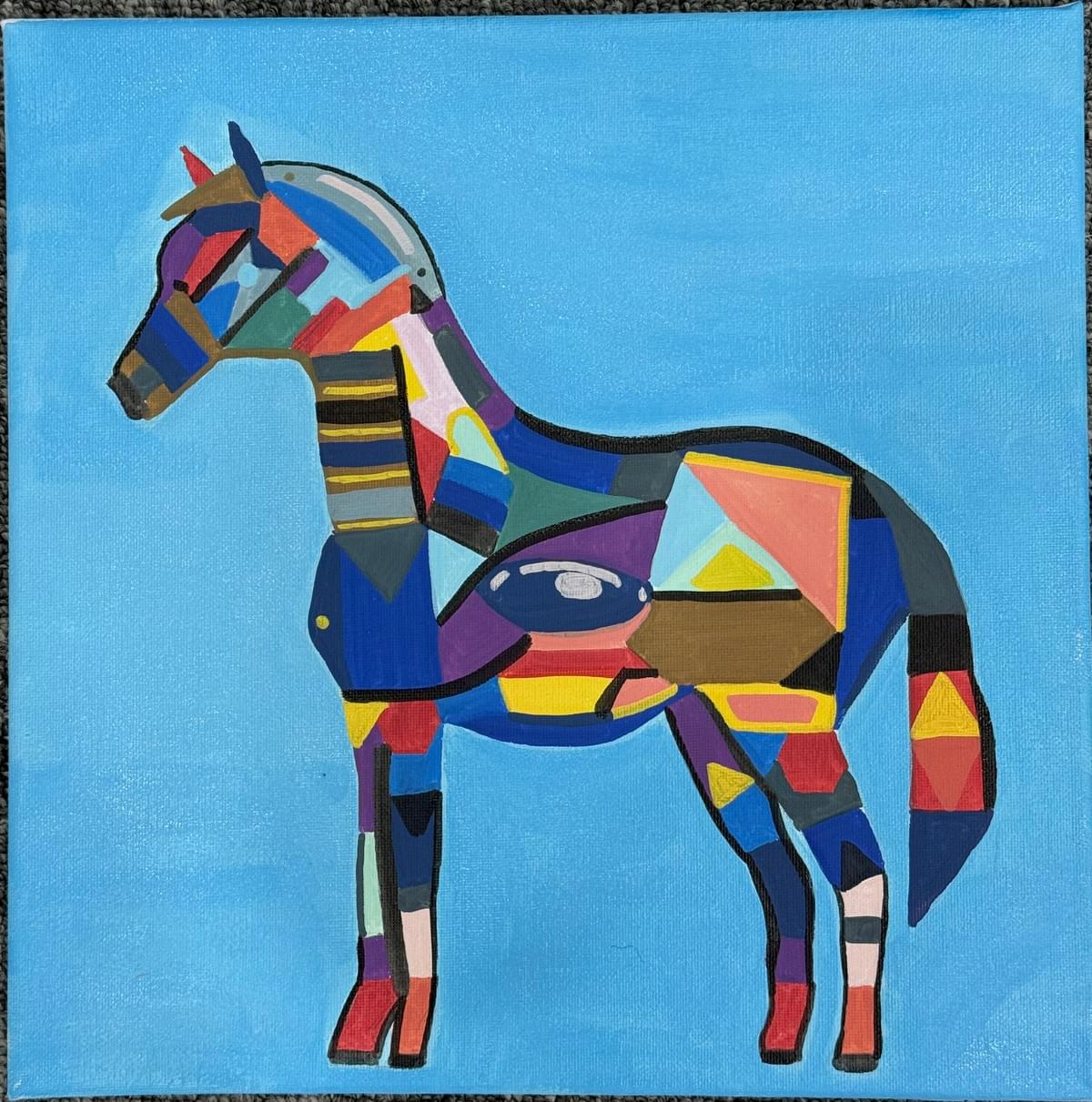
I started with the overall shape of a horse and then filled its body with ellipses, triangles, pentagons, trapezoids, and other shapes, with different colors. I liked how these shapes could look completely different on their own but still work together as part of one image. Through this piece, I wanted to show how mathematical shapes can organize an image while still giving me the freedom to experiment with color and composition.
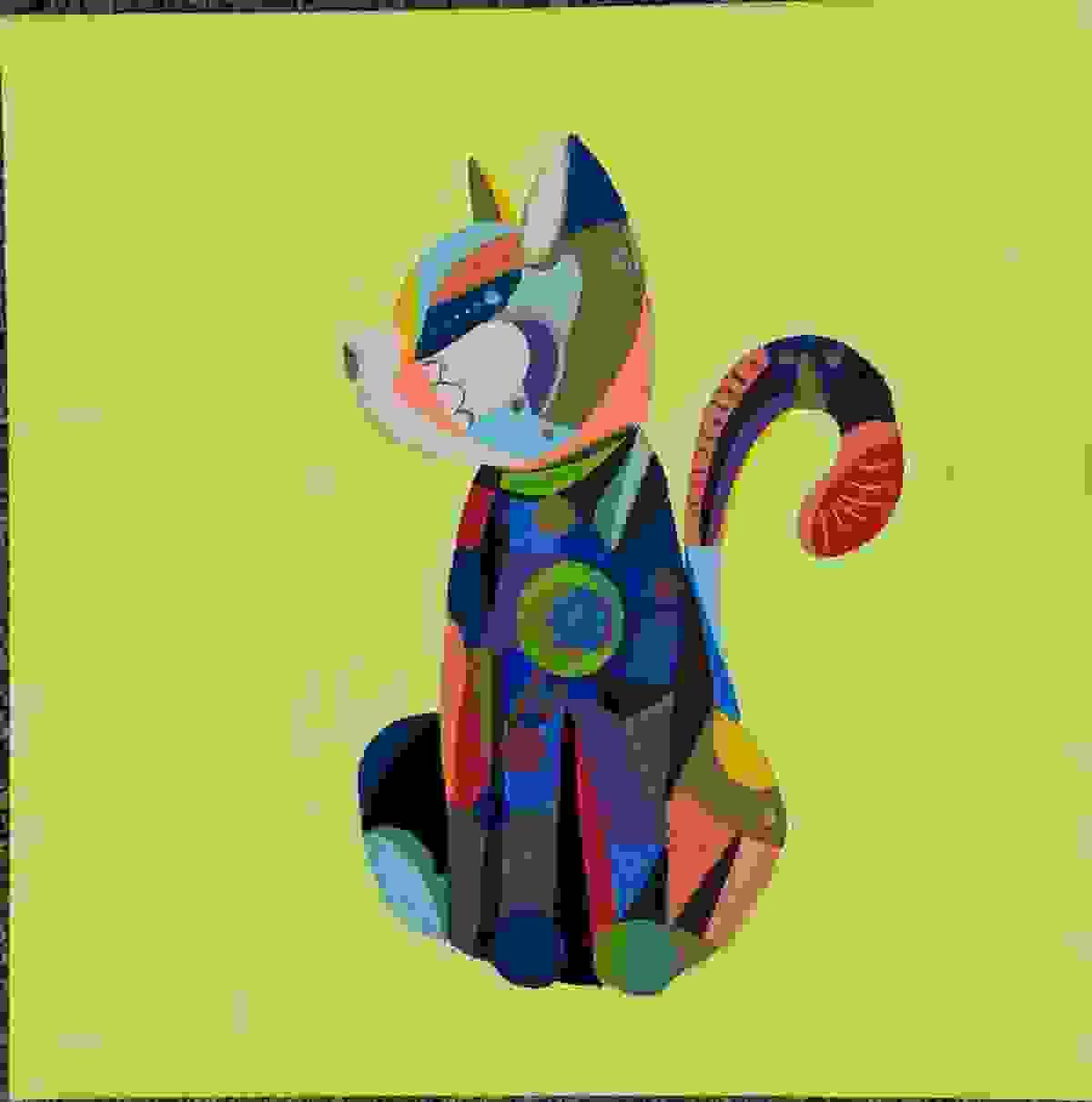
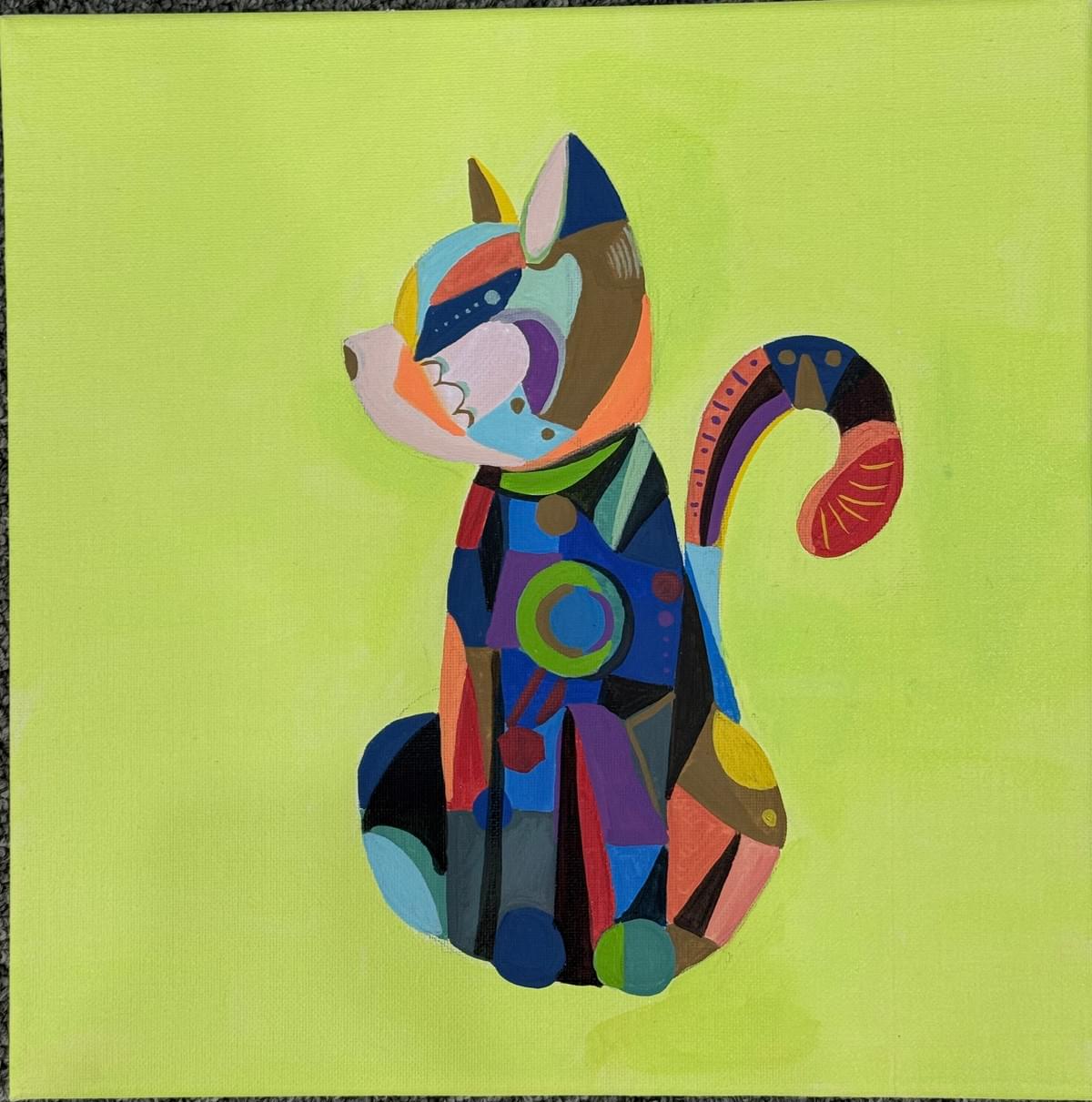
I wanted to try the same idea with a dog. I started with the basic outline of the dog and then filled the inside with circles, triangles, trapezoids, and other shapes, with different colors. I was interested in how the same mathematical idea could create a completely different image just by changing the arrangement of the shapes. This piece still explores how mathematical shapes can organize an image while still giving me the freedom to experiment with color and composition